
“AI is not going to take your job; the person who knows how to use AI will take your job,” DBIA’s Director of Virtual Design & Construction (VDC) Brian Skripac, CM-BIM, LEED AP, DBIA, said when asked about the skepticism some have around using artificial intelligence (AI).
In the architecture, engineering and construction (AEC) industry, this sentiment is increasingly relevant as firms look to apply AI across all delivery methods, including in design-build projects. AI is reshaping how teams approach design, construction and collaboration throughout the project lifecycle.
Skripac explained people often fear a particular conception of AI, maybe an image cultivated through media, speculating on what AI could look like without boundaries. These images can sometimes reinforce a misunderstanding of what AI is capable of and how it’s used. Skripac pointed out that many people already use some form of AI, even if they haven’t realized it.
“Part of it is normalizing,” he said, adding that helping people understand how they are already using AI –– even in everyday life –– and showing them how it applies in industry settings will help alleviate some of the apprehension surrounding it.
“Your email finishes your sentences; that’s AI. It’s not scary,” Skripac said.
Design-Builders Explore AI’s Potential
Cindy W. Baldwin, CGC, LEED AP, CM-BIM, CM-Lean, President of VDCOTech, says most people working in design-build are intrigued and curious but have some hesitation about what AI can do in the industry. Many want to see how they can incorporate it but don’t know how to control or govern it.
“The problem I have with AI is everybody just thinks of it as Artificial Intelligence. It’s an umbrella term,” Baldwin said. “You’re really augmenting your intelligence.”
The umbrella of AI covers machine learning, supervised learning, computer vision and much more. These concepts may sound daunting, but understanding how they streamline complex processes makes them easier to grasp.
Baldwin has noticed design-build teams seem to be more open to using AI tools than others in the industry. Since teams are already collaborative, they view AI as a way to further enhance that collaboration.
“They see it not as a threat. They see it as a collaboration tool,” Baldwin said. “Design-builders are collaborative. They do want to do things better. They are on the forefront of the industry at large.”
When teams are starting to figure out how they want to use AI in their projects, Baldwin recommends instead of asking the question, “How can I use AI?”, ask, “What are the problems I am trying to solve?” This will help lead to choosing the right tools. From there, partner with tech-savvy staff. She recommends firms hire an AI consultant or bring one on as a board member to answer questions and help guide the process.
AI in Action Across the Project Lifecycle
Two years ago, the team at Ferrovial Construction started asking a similar question. “What are our project challenges, and how can AI address them?” They began leveraging AI years ago to detect and analyze objects and create designs. Unlike traditional AI, which performs specific tasks intelligently but cannot invent new things on its own, generative AI is able to create new things based on the information it knows. Generative AI has pushed them to devise new strategies to better implement the technology, and they are finding ways to use AI throughout the construction lifecycle.
In the contracting phase, Ferrovial uses AI to evaluate the contract and try to predict the risks they could face if they take on the project. It also constructs an analysis of the market and their competitors to help them make decisions on the opportunities they want to take. AI helps with the bid writing process during the contracting phases by assisting in refining the content and accelerating proposal development. Miguel A. De Urquía, Ferrovial Construction’s Innovation AI Program Manager, said this allows the team to focus on the things that are most important.
“AI is not yet fully ready to understand the technical documentation, but it is helping us in trying to analyze it,” De Urquía said.
During the engineering phase, AI classifies documents and extracts structured data from the drawings. It also reduces the administrative burden on the team, allowing them to focus on high-level tasks.
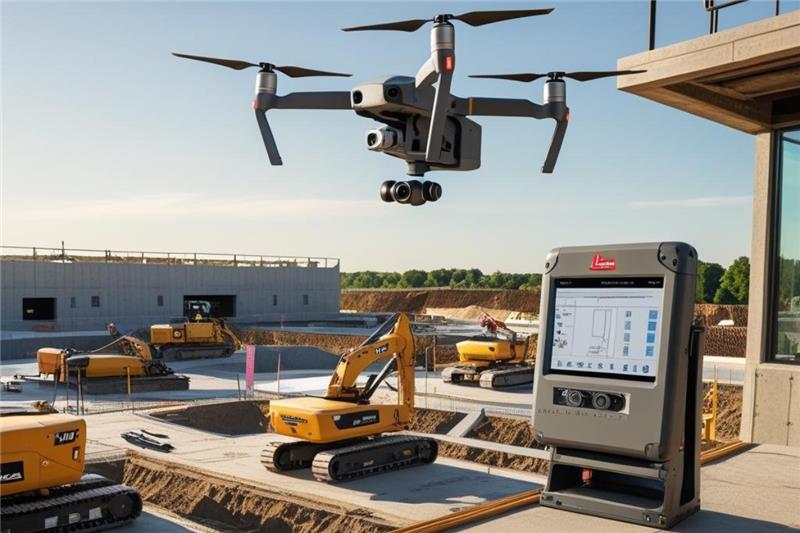
By incorporating AI into the construction phase, administrative tasks can become standardized and digitalized, saving time in the process. The team also uses AI to evaluate risks and track whether the project is staying on schedule. Through installing cameras on a site, the team can use AI to track where materials are moving around the site and also detect safety non-compliance, support automated incident alerts and streamline accident reporting.
While Ferrovial uses a variety of delivery methods, their use of AI across multiple phases of the project lifecycle mirrors the same collaborative, full-team approach that defines design-build. These real-world applications demonstrate how AI can support the kind of seamless communication and problem-solving that design-build teams strive for.
Making Design Data Talk Back
Baldwin talks to her AI daily, inputting decades’ worth of project data into its database. “It’s become part of my daily workflow,” she said. Each morning, she checks in with her AI assistant to pick up where she left off, clarify her ideas and organize her tasks. She sees this as a progression toward more sophisticated systems.
“We’re moving into a place where we can not only talk to our virtual assistants and communicate to them like people, but we can talk to our buildings. We can talk to our drawings. We can talk to our designs,” Baldwin said.
This kind of fluid, real-time interaction with design data also supports the collaborative decision-making that defines design-build. With quick access to historical project insights, teams can make faster, more informed choices without working in silos.
“We moved from blueprints to BIM, and then we went from BIM to AI,” Baldwin said. “We’re now trying to make actionable data.”
Smarter, Safer Job Sites Ahead
De Urquía is excited about the future of AI implementation in construction, particularly in terms of job site safety. In just a few years, the technology has evolved from merely detecting and identifying objects to describing what it sees and generating a report. The team is testing autonomous roller robots to move heavy workloads, shifting the burden of transporting materials to the machine instead of the workers and making it a safer working environment for them.
De Urquía is also looking to the future to see what humanoid robots could be capable of on the job site. These humanoids could tackle the most challenging and dangerous tasks, keeping workers safe from potential harm.
Even with exciting prospects for the future, a study has shown that only 20% of AEC firms feel ready to use AI at an advanced level, and only 1% of firms characterized their generative AI rollout as mature. It will take the industry some time before robots assisting on job sites become anywhere close to a common occurrence.
Firms unsure about how to begin incorporating AI into their work can start by automating redundant tasks, allowing the team to focus on more valuable work. In design-build, this shift not only improves efficiency but also supports safer job sites and smarter, more responsive design processes. It’s a tangible way to advance collaboration and innovation across the project lifecycle. Skripac believes some of the areas AI will have the most immediate impact are rapid access to digital project information, moving from reactive to predictive opportunities and generative design. These are all areas firms can start exploring to see how to better optimize their team productivity.
AI may not be building projects on its own anytime soon, but for collaborative teams willing to embrace it, the tools are already here to build smarter, safer and faster together.