
Rebecca Blankenship, FDBIA, didn’t set out to become an evangelist for progressive design‑build (PDB). Her first exposure to the built environment came in the U.S. Air Force, where she served as a Civil Engineering Technician and learned accountability and collective problem solving can spell the difference between a safe runway and an aborted mission. After completing her enlistment, she pivoted to architecture, eager to design the facilities she once maintained. It was only when she stepped into a project‑management role — first on the design side and later with a general contractor (GC) — that she encountered the delivery method that would define her career.
“I participated in my first design‑build project for the U.S. Army Corps of Engineers, and I was immediately hooked,” Blankenship recalls. “I loved the collaboration and shared problem solving that design‑build fosters.”
Two months after joining a GC, she was assigned her first PDB project. “Since then, I’ve focused primarily on PDB work, drawn to the trust, transparency and innovation it enables.” That early project became a theme: if the team could share risk and reward, they could push past traditional silos and deliver better outcomes for Owners and communities alike.
A Three‑Lens Perspective
Blankenship’s resume follows a deliberate arc — engineering, architecture, construction — each stop chosen to deepen her understanding of collaborative delivery. Her time as an engineer taught her the language of infrastructure; her years in architecture sharpened her design sensibility; her stint with a contractor grounded her in field realities. That triangulation now powers her work as an alternative delivery advisor, where she helps public agencies conduct Owner readiness assessments, guide alignment workshops and rescue troubled projects.
Before Blankenship signs on to steer an Owner’s first PDB venture, she conducts what staff jokingly call her pre‑flight safety briefing. No slides or spreadsheets — just four words on a whiteboard and a hard reminder that skipped steps show up later as change orders. Those words form the Four Ts she insists every agency pass before the RFQ leaves the gate:
- Trust – Does the culture reward transparency, or do messengers get shot? She once watched a risk manager bury bad news until bid day because his bonus favored cost underruns. The project never recovered.
- Team – Are finance, legal and facilities speaking the same language on scope and risk? When the city of Yakima aligned its internal teams early, it shaved three months off decision time in design validation.
- Timing – Can leadership honor phase‑gate approvals without political whiplash? A coastal county ignored this cue, swapped commissioners mid‑stream and spent six figures untangling authority.
- Talent – Does the agency have or will it procure the expertise to act as an Owner of Choice? Blankenship often embeds coaching clauses in RFPs so staff grow alongside the project.
If any answer comes back shaky, she presses pause. “Better a week of discomfort now,” Blankenship tells clients, “than a year of trench warfare after award.” Teams that take the detour, she adds, surface fewer surprises and build a project culture strong enough to survive the inevitable turbulence of delivery.
The Progressive Design‑Build Edge
Blankenship’s enthusiasm for PDB is backed by data and field results. The 2024 FMI Design‑Build Utilization Study projects that design‑build will account for nearly half of all U.S. non‑residential construction spending by 2028. Within that surge, PDB is already being used on roughly one‑third of design‑build projects nationwide. That share climbs to 40% or more in hotspots such as the Pacific region and the water/wastewater sector. Public Owners and agencies are embracing PDB because it lets them collaborate early, lock in transparency and validate scope before construction dollars start flying.
From Blankenship’s vantage point, the numbers tell only half the story. PDB’s real power lies in its human mechanics. Teams begin with chartering sessions that foster psychological safety. Transparent, open‑book cost modeling rewards ingenuity instead of secrecy. Finally, milestone‑validation checkpoints give Owners room to adjust course without sparking disputes. She’s watched those dynamics shave months off schedules on aviation and healthcare projects while keeping contingency dollars untouched.
Independent research backs her anecdotal evidence. A 2018 CII/Pankow study found design‑build projects finish 102% faster than comparable design/bid/build jobs and boast 3.8% lower cost growth. PDB contracts push those advantages further by aligning incentives from day one and reducing change‑order churn. “Successful design‑build isn’t just about delivering a building,” Blankenship tells emerging professionals. “It’s about building a high‑performing team that solves problems together.” She notes the PDB helps embed that collaboration into the delivery process.
Planting DBIA Roots in Washington State
When she first pursued DBIA’s five‑day certification bootcamp in 2010, design‑build practitioners in the Pacific Northwest were scattered. Blankenship and two peers changed that by co-founding the Inland Chapter of DBIA in Washington state, where she later served as secretary and president. As design‑build activity surged in Yakima and Wenatchee, she helped launch the Central Washington Chapter and continues to advise its leadership team. Over the past nine years, she has served on multiple committees for the DBIA Northwest Region Board, channeling lessons from the field into regional policy and programming.
Her commitment to local action underscores how chapters are the grassroots engine of DBIA. With Regions and local Chapters stretching coast to coast, DBIA membership automatically connects practitioners to a local network that delivers topic‑specific education, networking opportunities and awards programs. From breakfast panels to site walks, these volunteer‑driven groups keep the design‑build conversation moving and give members countless ways to jump in.
From Grassroots to National Spotlight
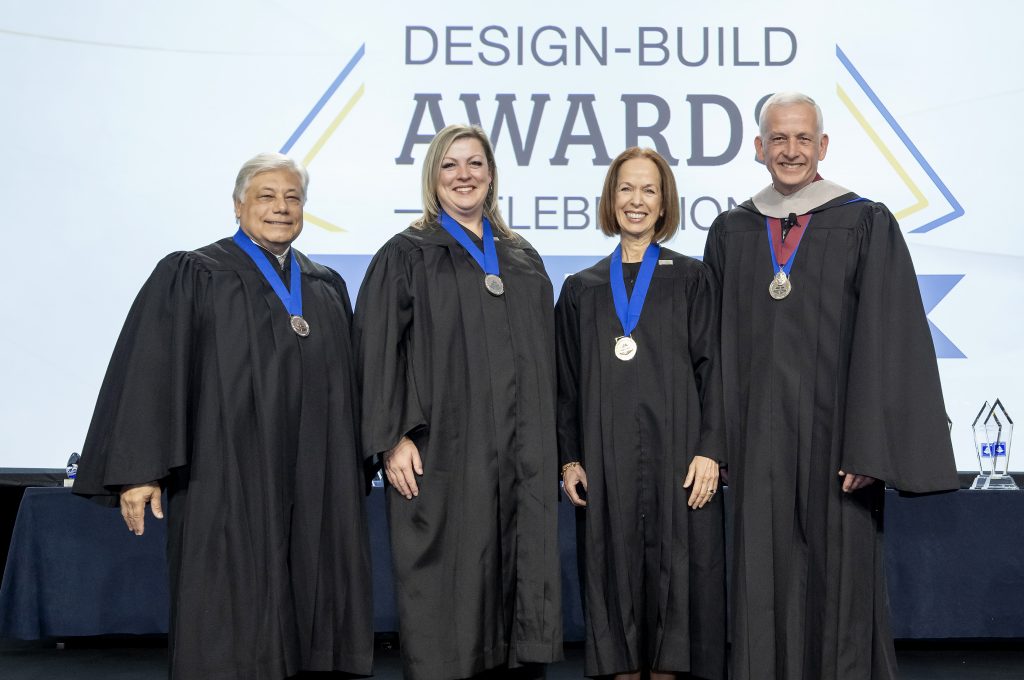
Blankenship’s chapter work did more than knit together a local community; it vaulted her onto DBIA’s national stage. In 2023, she joined the ranks of an elite group, the less than 2% of certified design‑build professionals known as DBIA Fellows. Members of the DBIA College of Fellows have a track record of sustained contributions that have reshaped the way America delivers its most complex projects.
The elevation to Fellow came with new responsibilities. As a member of the Fellows Nominating Committee, Blankenship now helps guide a rigorous peer‑review process that will unveil the 2025 Fellows class at the Design‑Build Conference & Expo in Las Vegas in November. She also brings her field perspective to DBIA’s Strategic Planning Committee, helping craft a five‑year roadmap that puts progressive design‑build best practices front and center. When time allows, she rolls up her sleeves with Owner outreach task groups, translating job site lessons into practical tools for agencies embarking on their first design‑build ventures.
Asked what the Fellow designation means, Blankenship is quick to redirect the spotlight. For her, the title is less a trophy than a to‑do list. Mentoring, chapter building and guiding public agencies toward transparent, team‑based delivery now top her flight plan. “A DBIA Fellow is someone who has gone beyond delivering great projects. They’ve helped shape how we deliver them,” she says. By that definition, her journey is still gaining altitude.
In every role, the throughline is clear: Blankenship is still doing what she started in Spokane. Only now her audience spans the entire nation, and the runway she’s building is wide enough for thousands of practitioners to take flight.
Your Runway into Progressive Design‑Build
Whether you’re a seasoned practitioner or an Owner taking your first steps into collaborative delivery, DBIA offers a clear flight plan:
- Owner Readiness Assessment: This resource helps Owners understand how prepared they are to both engage in design-build project delivery and reap the full benefits and achieve exceptional outcomes.
- Deeper Dive – Progressive Design-Build: This Deeper Dive document outlines the Progressive Design-Build delivery process and its key phases.
- Progressive Design‑Build Course Library: DBIA’s on‑demand training series that walks learners through procurement fundamentals, phase‑gate validation and post‑award collaboration; courses can be bundled to earn a Progressive Design‑Build certificate
- Design‑Build Delivers Webinar Series: Monthly deep dives on chartering, risk allocation and open‑book cost modeling, recorded for on‑demand viewing.
- Annual Conference & Expo: DBIA’s flagship annual gathering offers sector‑spanning education, premier networking and the formal celebration of individual, project and team award winners.
- Chapter and Region Events: Regional and chapter‑level networking, education and recognition events, grassroots touchpoints for professionals at every career stage.
Start your own journey by downloading a guide, registering for an event or engaging with your local chapter or region.
