“Do you love to win, or do you hate to lose?”
That was the question Cal Poly San Luis Obispo’s D&T Construction team asked each prospective new member for the 2025 National Design-Build Student Competition.
There’s only one answer they were looking for: I hate to lose.
Even before the RFQ went out, the Cal Poly team wanted to be sure every new member’s philosophy aligned with that competitive edge. For them, hating to lose didn’t mean fear of failure; it meant refusing to settle, holding each other accountable and treating every step of the process like it mattered.
That shared mindset fueled months of preparation that began long before the semester did. Between internships, travel and classes, Cal Poly’s team approached the challenge with the same rigor and expectations as a professional design-build firm.
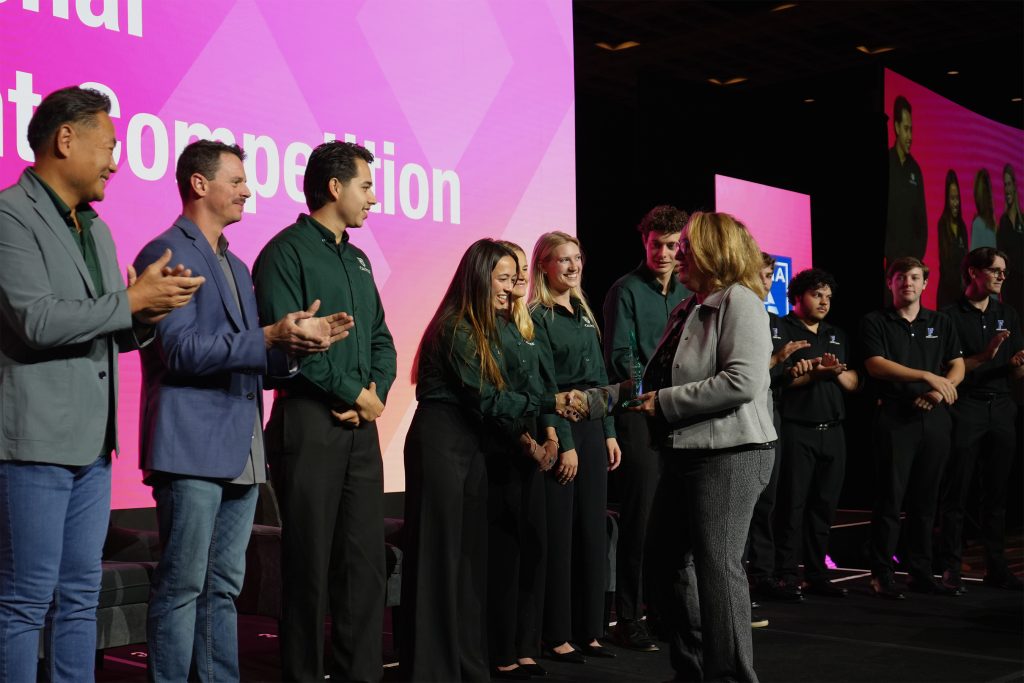
“We wanted to treat this like a real project, not a student competition,” D&T Construction team member Jacquelyn Lomano explained. That simple idea of taking themselves and their work seriously became the foundation for a first-place finish in Las Vegas.
The University of Florida’s (UF) Cypress and Alfred State College’s Pioneer Design-Build teams came in second and third, rounding out a fiercely competitive field. This year’s challenge tasked teams with designing an expansion at a major airport hub, testing their ability to apply Design-Build Done Right® principles in a real-world scenario, balancing cost, schedule, sustainability and community impact. Thirty-three teams from across the nation submitted proposals. Seven regional winners advanced to the Request for Proposals phase, and the top three presented their designs live during the Design-Build Conference & Expo in Las Vegas before a panel of industry experts on Nov. 6.
Balance, Grit and Sleepless Nights
Across all three finalist teams, one theme rang loudest: balance. These students turned the idea of collaboration into action, showing how teamwork moved beyond theory and into their daily work. Between thesis deadlines, exams and other competitions, they discovered the success of a design-build project often depends on how well you manage everything else.
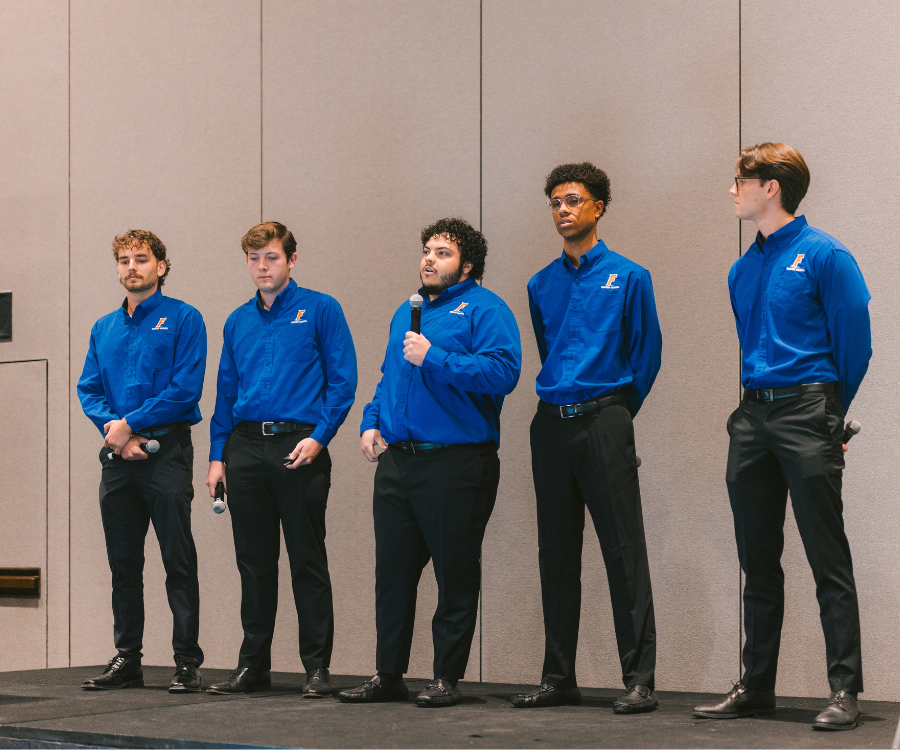
UF’s Cypress team turned their packed schedules into a crash course in adaptability. Competing wasn’t part of their semester plan, but they found themselves pulling late nights and early mornings to meet every deliverable.
“This was an optional team for all of us, something that wasn’t even on our plates at the start of the semester,” said Aidan Newsom of Cypress. “Balancing classes, exams and the competition meant late nights and early mornings, but it was worth every bit of it.”
When they finally took the stage in Las Vegas, they did it on almost no sleep and just a few hours of rehearsal but with a clear understanding of what real collaboration looks like under pressure. The team left with second place and a new perspective on what it means to perform when it counts.
At Alfred State College, the Pioneer Design-Build team brought small-school grit and underdog energy to the finals. Almost all were architecture majors learning construction concepts on the fly. They balanced the competition with thesis projects, club work and other commitments, all while proving their school belongs on the national stage.
“We’re the only team from our school and one of the smallest programs here, and we’re proud to represent Alfred,” said Pioneer’s Selena Fullone. “We showed we belong in the conversation.”
Their third-place finish marked another milestone in what’s becoming a growing legacy for Alfred State, following their rookie appearance at the national competition in 2023.
Confidence + Preparation = A Standout Performance
In addition to the top three teams, one student is presented with the Best Individual Presenter Award, recognizing exceptional communication, professionalism and command of their project during the final presentation. This year’s recipient, Asa Richards of the University of Florida, described his approach as a shift from memorization to understanding.
“I know what I’m doing,” Richards said. “I’ve spent countless hours preparing this presentation, working with this team, and I know what I have to say. I treat it like I’m just explaining it to my team.”
His confidence came from meticulous preparation and a clear belief his teammates were ready to step in when needed, a reminder that even standout individual performances in design-build rest on trust and collaboration.
Putting Real-World Skills into Action
This year’s student competition mirrored the real world, from qualifications and team formation to proposal development and final presentations. It demanded creativity, technical accuracy and the kind of teamwork that keeps projects moving when time and energy run low. Every team hit roadblocks, and every one of them found a way through.
Their collective takeaway was that excellence in design-build requires focusing on more than technical skill. It takes preparation and improvisation, ambition and endurance, confidence and humility.
“What we see in this competition each year is the future of our industry taking shape,” said Lisa Washington, DBIA Executive Director/CEO. “These students already understand how to align teams, manage complexity and deliver value, skills that will make them immediate assets in a market demanding design-build leadership.”
Design-Build’s Next Generation Shines Bright
For many of these students, this competition was their first experience leading a multidisciplinary team, and it’s just the beginning. Several said they plan to pursue design-build internships or full-time roles with firms they connected with during the Design-Build Conference & Expo. Others spoke about staying involved in DBIA’s student chapters or mentoring next year’s teams, keeping that momentum alive beyond the classroom.
The event also gave them something less tangible but just as important: professional relationships. Many finalists said meeting industry professionals at the conference helped them see their potential careers in a new light, opening doors they hadn’t even known were there.
For DBIA, it’s a glimpse into the future of design-build, a future where collaboration, trust and innovation are second nature.
DBIA thanks Parsons Corporation for sponsoring this year’s student programming and HCSS for providing its estimating platform to participating teams.Information on the 2026 National Design-Build Student Competition will be available this spring at dbia.org/student-competition.
Meet the Top 3 National Student Design-Build Competition Teams
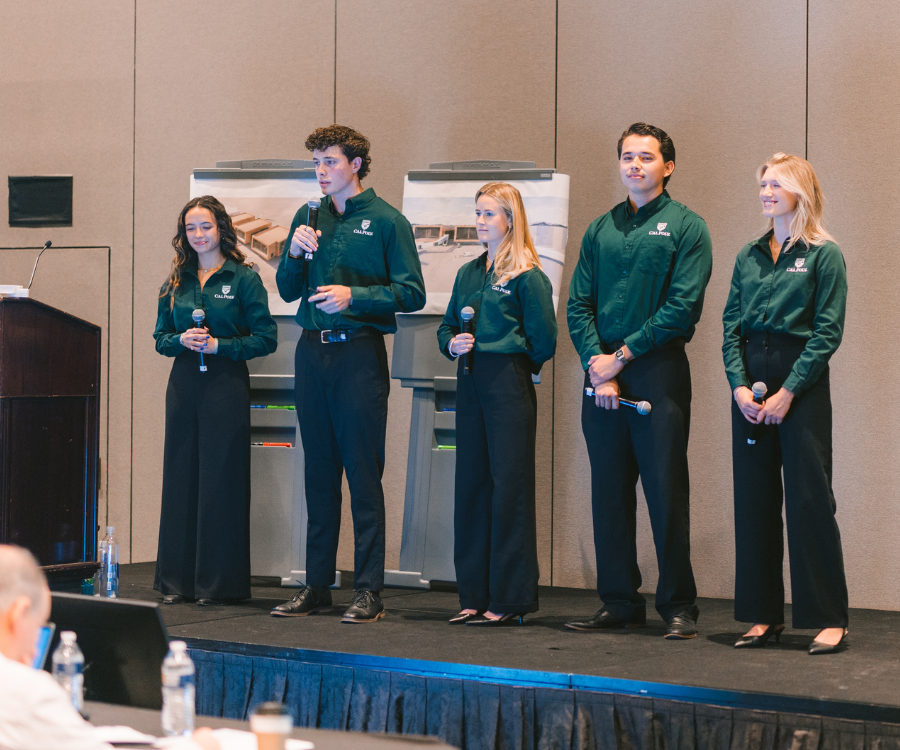
WINNER: California Polytechnic State University, San Luis Obispo
2ND PLACE: University of Florida
3RD PLACE: Alfred State College