
Let’s be honest — facility teams are stuck in a loop. Every time a project wraps, we’re handed a stack of PDFs, binders, maybe even a CD (yes, still) and expected to operate a building from that mess. So, what do we do?
- Rebuild asset lists
- Chase documentation
- Recreate what already existed during construction.
The Reality Behind the Rework
This isn’t just an occasional headache. It’s a widespread, industry-wide problem. Research from Autodesk and the International Facility Management Association shows 95% of construction data goes unused after turnover. More than half of facility teams wait over six months to receive final handover documents. Eighty-five percent report receiving incomplete or poor-quality data. About 30% of energy is wasted due to inefficient asset operation, and nearly half of maintenance spending doesn’t deliver the intended results. The operations team ends up carrying 68% of the cost burden that comes from bad data and disconnected processes.
We’ve seen this story repeat itself in hospitals, airports, universities and corporate campuses. Teams work hard to deliver projects, but without a consistent strategy for data, the people responsible for operating the building are left to start over. And that’s where so much value is lost — in translation, in handover and in trying to connect the dots after the fact.
Why Delivery Method Matters
One of the biggest missed opportunities is rooted in how projects are delivered. When the delivery method splits design, construction and operations into separate silos, collaboration and data quality often suffer. That’s where design-build can offer real advantages. When Owners, architects, contractors and facility teams are aligned under a single contract, collaboration starts earlier. Expectations become clearer, data flows more consistently and operational outcomes improve. Design-build isn’t just about speed or cost control. It’s about giving Owners more influence over how asset data is created, verified and handed over. The result is a smoother transition to operations and a facility that’s more prepared for long-term use on day one.
The Fix: A Digital Thread
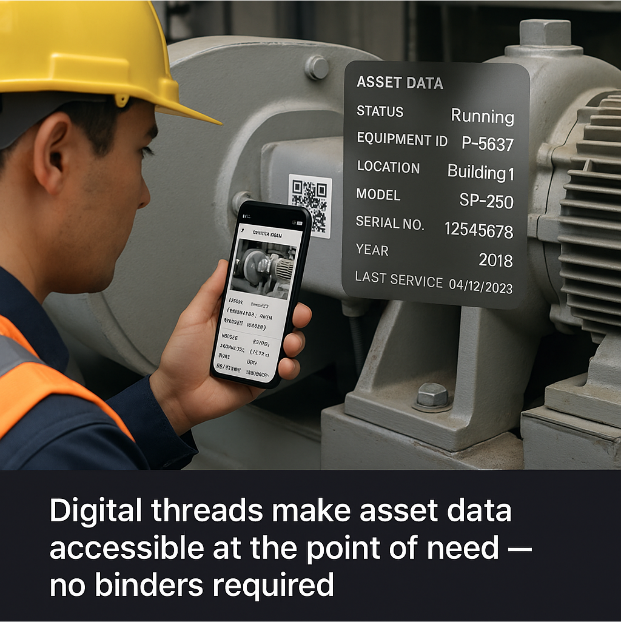
A digital thread connects planning, design, construction and operations with structured, standardized data that flows across the full lifecycle of a facility. With the right strategy in place, assets can be tracked during construction. Documentation and maintenance data can be tied directly to systems from the beginning, and field teams can scan a QR code and instantly access the information they need to do their jobs. This kind of approach stops valuable data from getting lost at turnover and ensures it’s usable by the people who need it most.
3 Ways to Get Started
Here’s how to move from buzzwords to better buildings:
- Define ops data early
Don’t wait for handover to start talking about data. Decide what’s needed at the 30% design mark: asset types, formats, naming standards and maintenance fields. - Verify as you go
Use tools like Autodesk Build to track and validate equipment, warranties and manuals as they’re installed — not retroactively. - Deliver real digital handover
Stop handing over stacks of PDFs. Use platforms like Autodesk Tandem to provide structured data, searchable docs and mobile access in the field.
Better Tools, Better Outcomes
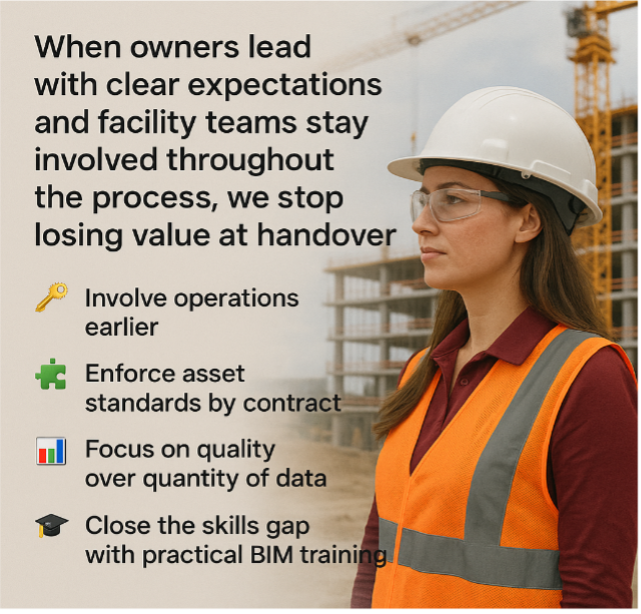
When operations teams are engaged early and data is treated as a critical part of the project, buildings are easier to manage, and facilities teams are set up for success from day one. We’ve both seen firsthand the shift that happens when Owner’s lead with clear expectations, when project teams focus on long-term value and when facilities professionals are treated as essential partners in the process.
That starts with a few key steps:
- Involve operations earlier in the process.
- Enforce asset data standards through contracts.
- Prioritize data quality over quantity.
- Provide hands-on training to ensure teams are ready to succeed.
It’s time to stop starting over. Let’s hand over buildings that work — the first time.
Tara Brice

Team Lead, Principal Customer Success Manager, Autodesk
Tara Brice is a Team Lead and Principal Customer Success Manager at Autodesk, where she partners with AECO enterprise customers to drive successful adoption of Autodesk Construction Cloud. She focuses on delivering measurable outcomes through collaboration, change management and process optimization.
Mark Mergenschroer

Technical Solutions Executive, Autodesk
Mark Mergenschroer is a Technical Solutions Executive at Autodesk with over 29 years of experience in the industry, helping owners modernize their operations through BIM, asset management and digital transformation. Known as “BIM Yoda,” he specializes in bridging the gap between design, construction and facilities management.