
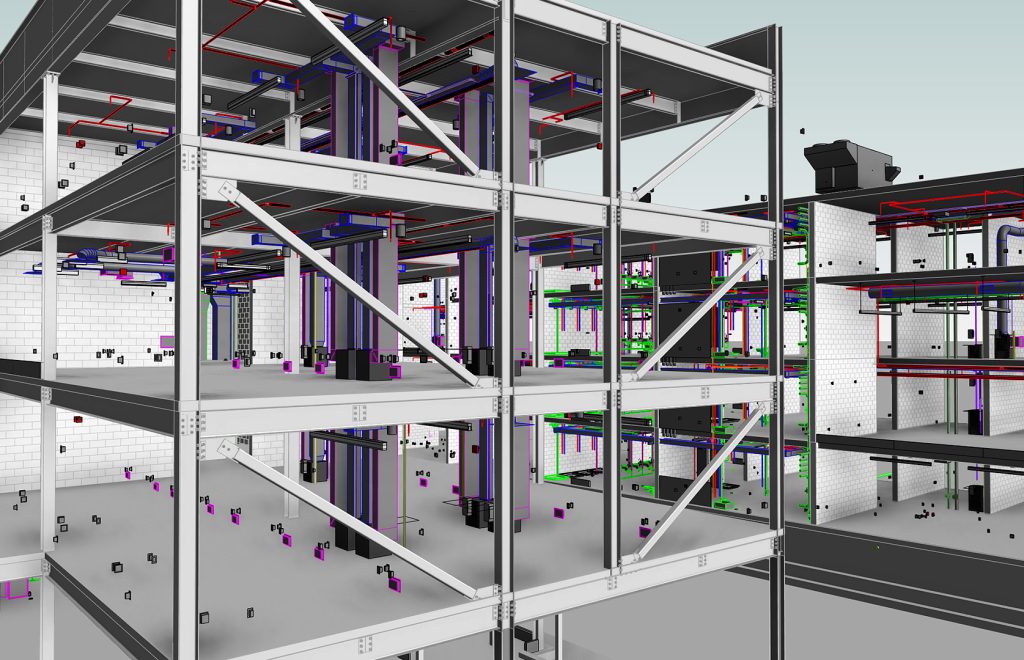
Over the past decade, design-build firms have made significant investments in BIM platforms, coordination software and digital workflows. For many mid-size regional organizations, BIM adoption is no longer the challenge. The tools are in place. The licenses are paid. The VDC manager has been hired.
And yet, digital coordination still feels reactive.
Clash meetings stack up. Model updates lag behind field conditions. Coordination cycles compress under schedule pressure. VDC leaders find themselves firefighting rather than driving strategy.
The issue is rarely technological. It is operational.
According to McKinsey & Company’s The Next Normal in Construction, an industry that contributes 13% to global GDP has experienced productivity growth of only about 1% annually over the past two decades, far below sectors where digital systems have been fully integrated. Rather than access to tools, the constraint is how those tools are structured within operations.
BIM Adoption Is Not VDC Maturity

There is a meaningful distinction between using BIM tools and operationalizing VDC. We all recognize what BIM adoption looks like.
VDC maturity, however, requires:
- Standardized BIM execution plans applied consistently across projects
- Forecasted digital workload aligned with project phases
- Predictable coordination cycle times
- Defined QA/QC checkpoints embedded within modeling workflows
- Capacity allocated proactively rather than reactively
In many design-build firms, VDC functions as a high-value capability but not yet as a structured production system.
As outlined in DBIA’s VDC Project Leader Primer, the evolution of VDC requires moving beyond corporate standards and focusing on direct implementation at the project level. Operationalizing VDC capacity is a natural next step, ensuring consistent support across projects.
The Hidden Constraint: Technical Production Capacity
As design-build delivery becomes more integrated, digital workload grows nonlinearly.
Early trade engagement increases modeling demands. Prefabrication strategies require higher LOD earlier in the timeline. 4D sequencing and constructability analysis become critical during preconstruction. Owners expect transparency through model-based visualization.
The result is that VDC teams are asked to do more, earlier and across more concurrent projects.
When digital production capacity does not scale with project concurrency, predictable issues emerge:
- Coordination velocity slows
- Model update latency increases
- QA/QC standards drift under schedule pressure
- Senior VDC leaders shift from innovation to workload management
This is not simply a talent shortage problem. It is a capacity structuring problem.
Why Traditional Scaling Approaches Fall Short
Mid-size firms typically respond to overload in one of three ways:
- Hiring reactively when backlog increases
- Engaging short-term external modelers during peak periods
- Asking existing teams to absorb additional projects
Each approach introduces variability.
Short-term augmentation can disrupt naming conventions, modeling standards and BIM Execution Plan (BEP) alignment. Reactive hiring rarely matches the pace of project ramp-up. Internal overload leads to burnout and inconsistency across projects.
In all cases, VDC remains capacity-constrained and operationally fragile.DBIA emphasizes that the VDC Leader is “a core project role, not an optional value-added position.” Many firms have embraced this leadership structure, but leadership alone cannot stabilize digital production if capacity expands and contracts informally. Operational maturity requires both defined leadership and structured scalability.
Operationalizing VDC Capacity
FMI and Autodesk estimate that poor data and miscommunication account for $31.3 billion in rework annually in the U.S. construction industry. Coordination breakdowns carry measurable financial consequences.
Operationalizing VDC means treating digital production with the same rigor applied to field operations. It requires:
- Forecasting modeling demand by project phase
- Aligning digital resources with pipeline visibility
- Maintaining persistent modeling standards across projects
- Building continuity within technical teams
- Designing capacity elasticity without compromising QA
Many firms plateau at this stage as tools evolve and expectations rise, but the underlying digital capacity infrastructure remains informal.
Operational maturity demands something more stable than ad hoc augmentation and more adaptive than fixed headcount alone.
The Missing Variable: Digital Capacity Elasticity

In field operations, elasticity is intuitive. Crews expand during peak phases and contract as scopes conclude. Equipment is mobilized strategically. Supply chains are forecasted.
Digital production rarely receives the same discipline.
Most mid-size design-build firms operate with either fixed VDC staffing or reactive augmentation. Neither creates true elasticity.
Without planned digital capacity elasticity:
- Modeling throughput becomes inconsistent
- Coordination velocity fluctuates
- QA/QC standards strain under concurrency
- Senior VDC leaders become capacity managers rather than technical strategists
Digital capacity elasticity requires intentional design that includes pipeline-based modeling forecasts, embedded technical continuity, standard-aligned scaling mechanisms and buffers aligned with project intensity.
Firms that treat VDC capacity as elastic infrastructure — rather than static headcount — move closer to operational maturity.
Toward Persistent Digital Infrastructure
As design-build firms deepen their digital capabilities, success depends on building model capacity that scales with demand while maintaining consistent standards.
Scaling this effectively depends less on additional software and more on how digital production is structured, forecast and integrated into long-term operations.
With that in mind, the VDC Project Leader role also extends beyond managing software. It enables people, defines processes and applies technology to support the whole design-build team. In that sense, VDC becomes embedded within project leadership, and sustaining that leadership requires capacity structures that match its strategic importance.
A Practical Path Forward
In our work at Wemoter, we’ve observed that mid-size design-build firms strengthen digital resilience by embedding specialized technical teams aligned to their BIM standards and long-term project pipelines. This insourcing model prioritizes continuity, industry specialization and integration, enabling elasticity without compromising control.
As VDC continues to evolve, the question may shift from “Do we have the tools?” to “Have we structured the capacity to sustain them?”
For firms rethinking how digital production fits into their long-term strategy, that shift is a meaningful place to begin.

Micaela F. Socci is the co-founder and CEO of Wemoter, helping AEC firms grow smarter by integrating pre-vetted remote talent. With roots in international trade and a passion for team management, she focuses on streamlining hiring, strengthening teams and making scalable growth actually achievable.