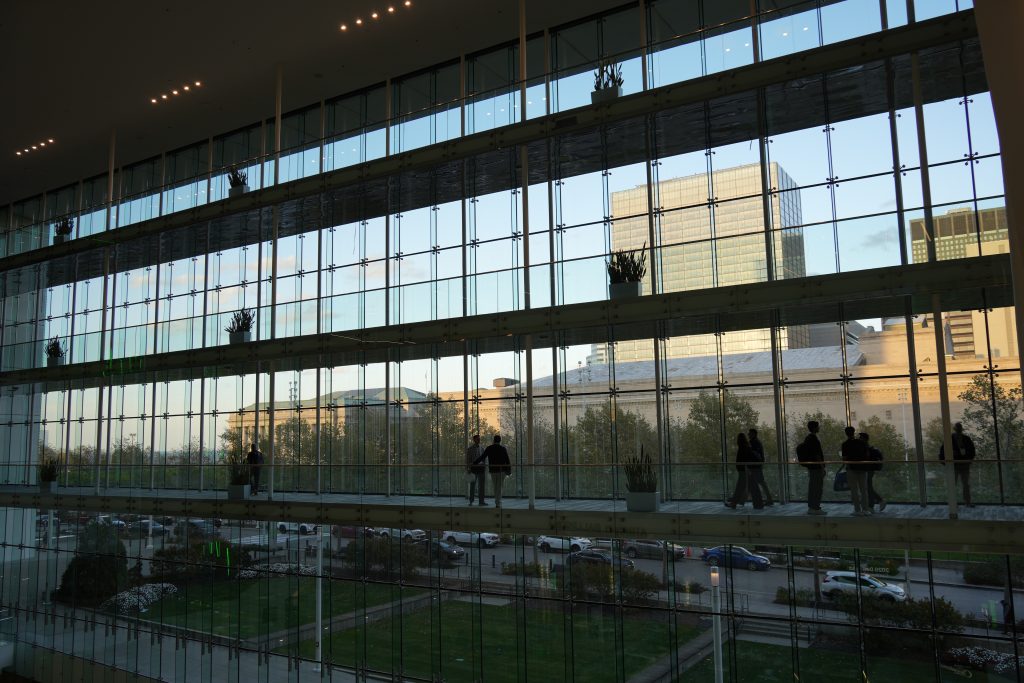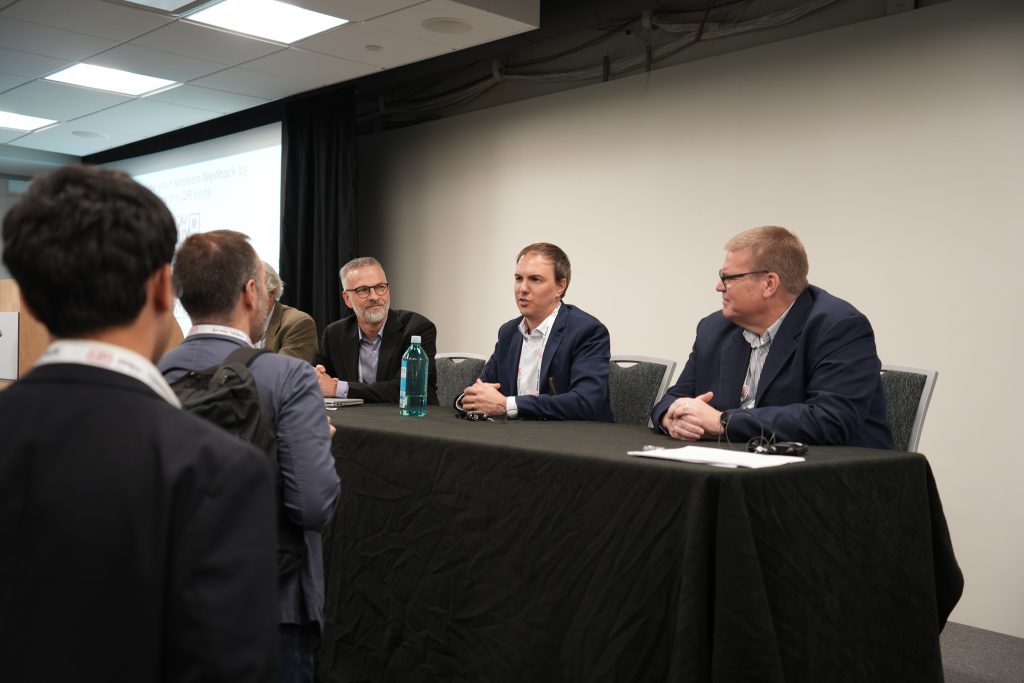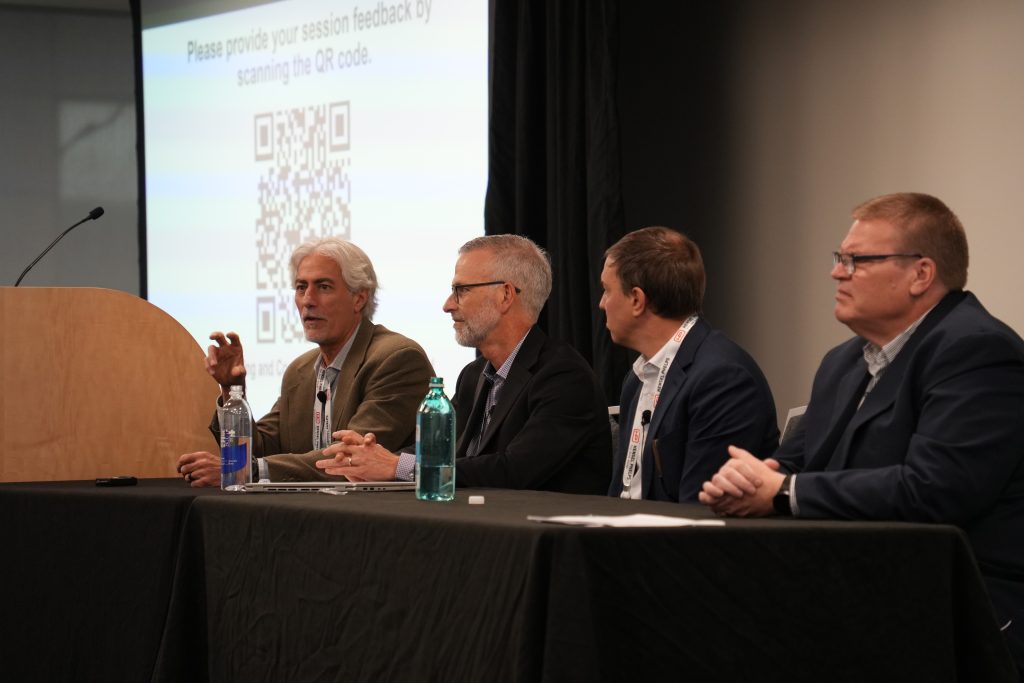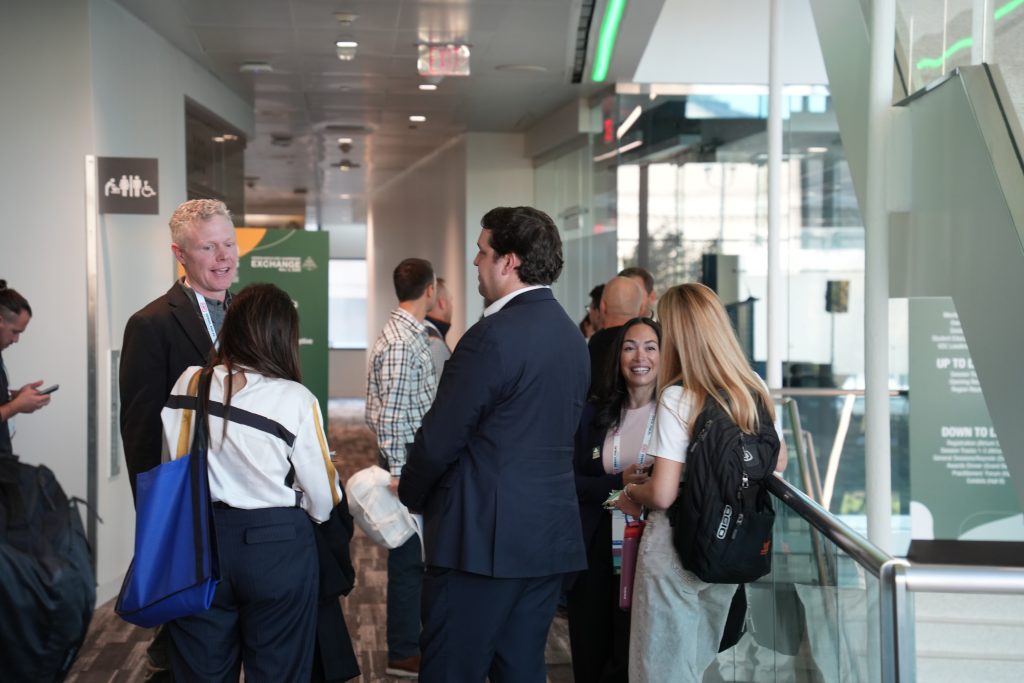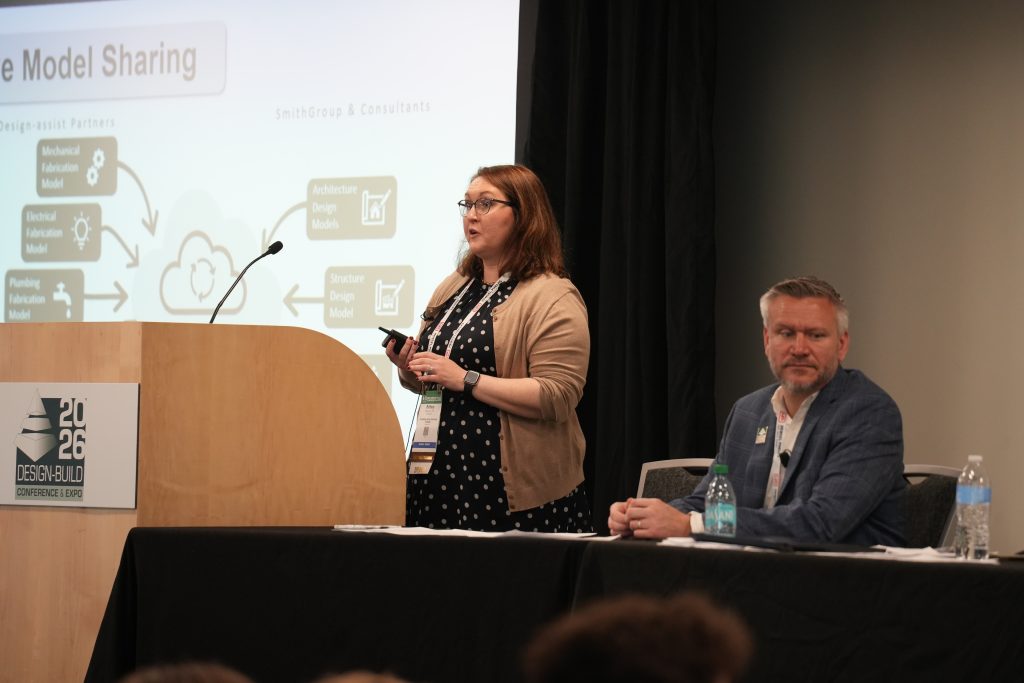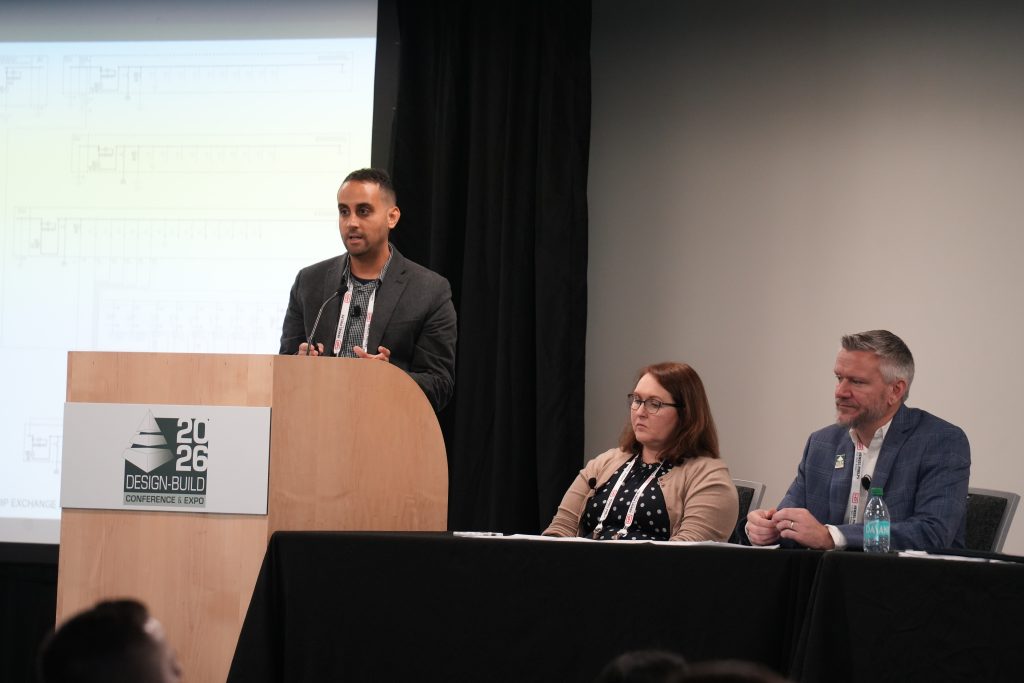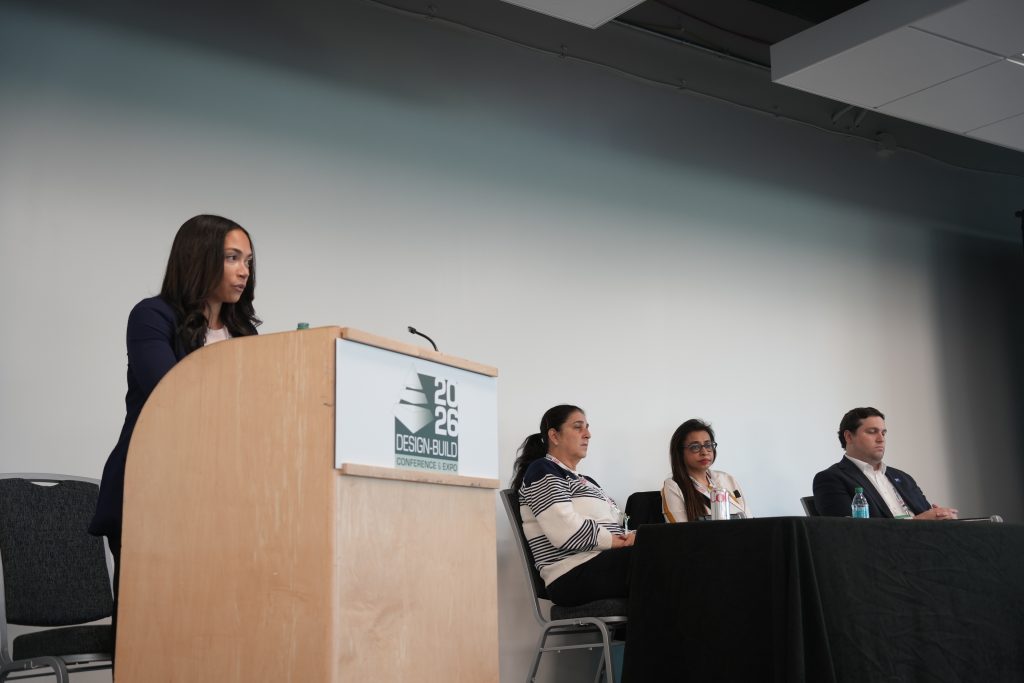
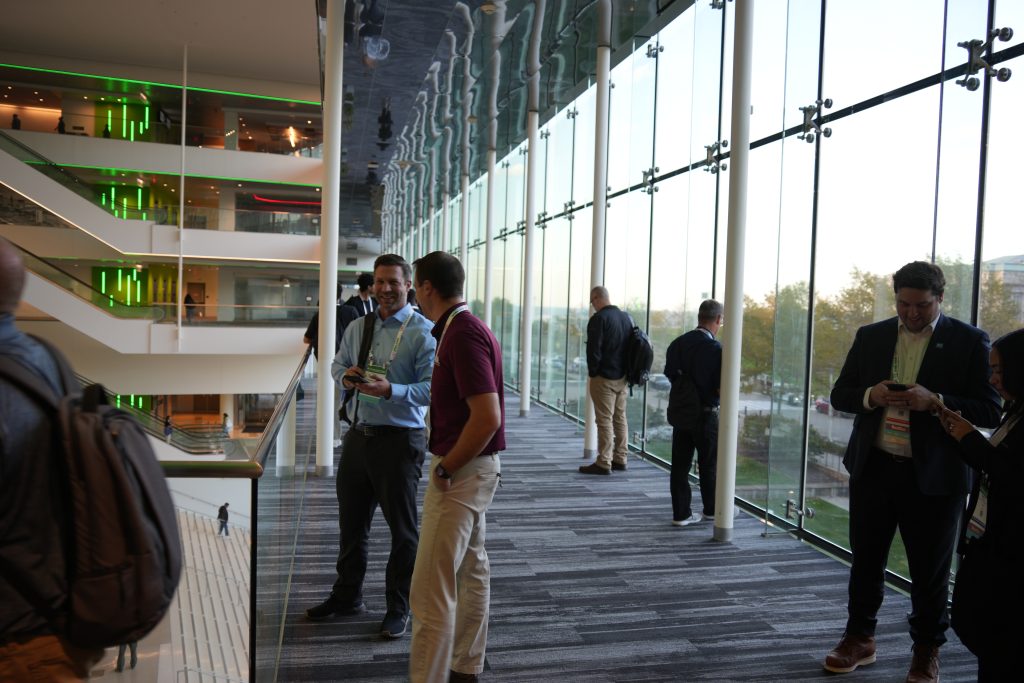
DBIA’s VDC Leadership Exchange (VDCLEx) returned for its fourth year as part of the 2026 Design-Build Conference & Expo. This year’s half-day preconference program in Cleveland explored how AI is already being used alongside established BIM and VDC practices to help design-build teams share information more effectively and close handoff gaps.
The project examples demonstrated tangible results while reinforcing a familiar lesson: people and processes come before technology.
“With all of the different technologies we saw presented during the VDCLEx, we continued to hear about the need to start with understanding the challenges project team members are having, and then define a process to solve that challenge before selecting the technology to implement” said Brian Skripac, DBIA’s Director of Virtual Design & Construction.
That emphasis also extended to Owners, who play an essential role in defining what information they need from project teams and how it should be delivered.
Managing Projects with AI on Design-Build Projects
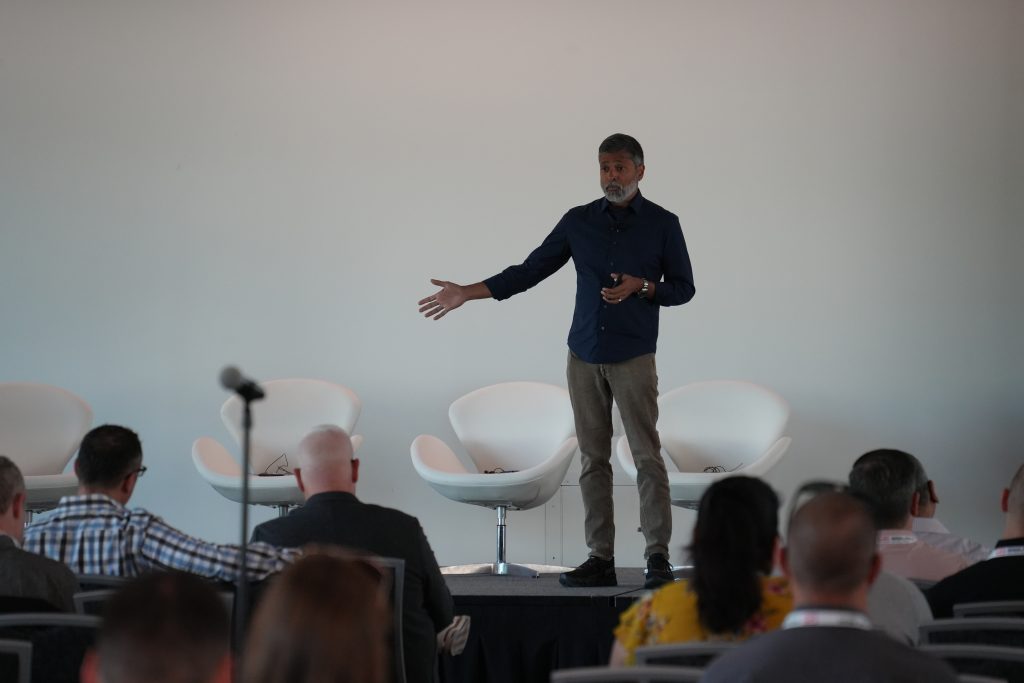
The afternoon opened with KP Reddy, founder and CEO of Zero RFI, discussing how AI could help manage design-build projects. Reddy noted that the industry already has plenty of technology, yet project teams still struggle to share information while maintaining accountability. He revisited lessons from BIM and VDC, particularly the industry’s tendency to treat collaboration challenges as interoperability problems. Even on collaborative design-build teams, someone must be accountable for each information handoff.
Reddy argued that AI could make model-based information more accessible to the entire project team through plain-language interfaces. He also outlined four principles for implementing AI on design-build projects: project-level governance, adherence to the Owner’s data rules, opt-in participation and transparency, with “no black boxes.”
Following the opening session, the program offered two concurrent tracks: VDC Deep Dive, geared toward providing experienced practitioners with a closer look at advanced technology applications, and VDC for Non-VDC Professionals, intended to bring the conversation to the broader design-build audience and highlight real-world process improvement outcomes.
VDC Deep Dive Track
Keeping Up with a $4B Design-Build Project
The first of two VDC Deep Dive sessions featured the EnTech, AECOM Tishman, Gensler and JB&B team, who discussed managing the connected tech stack for the $4 billion JFK Terminal One design-build project. Coordinating design changes across 1.9 million square feet requires a connected digital ecosystem where hundreds of stakeholders can access current information.
“The tech stack didn’t coordinate JFK Terminal One, but people did,” said Megan Salazar, Associate Vice President of Digital Delivery at EnTech Engineering.
That approach was reflected in how the team managed information throughout the project. The Port Authority of New York and New Jersey’s CAD/BIM requirements shaped the team’s workflow from the start, including how turnover data would be delivered. The team assembled as-built documentation throughout construction to support PANYNJ’s closeout and BIM submittals rather than leaving that work until the end.
Salazar noted that getting BIM adopted beyond the coordination team “can be the hardest part of our jobs” for VDC leaders. She also highlighted how putting Revizto on iPads helped extend access to model-based information into the field.
Concrete Uses for AI in Design-Build
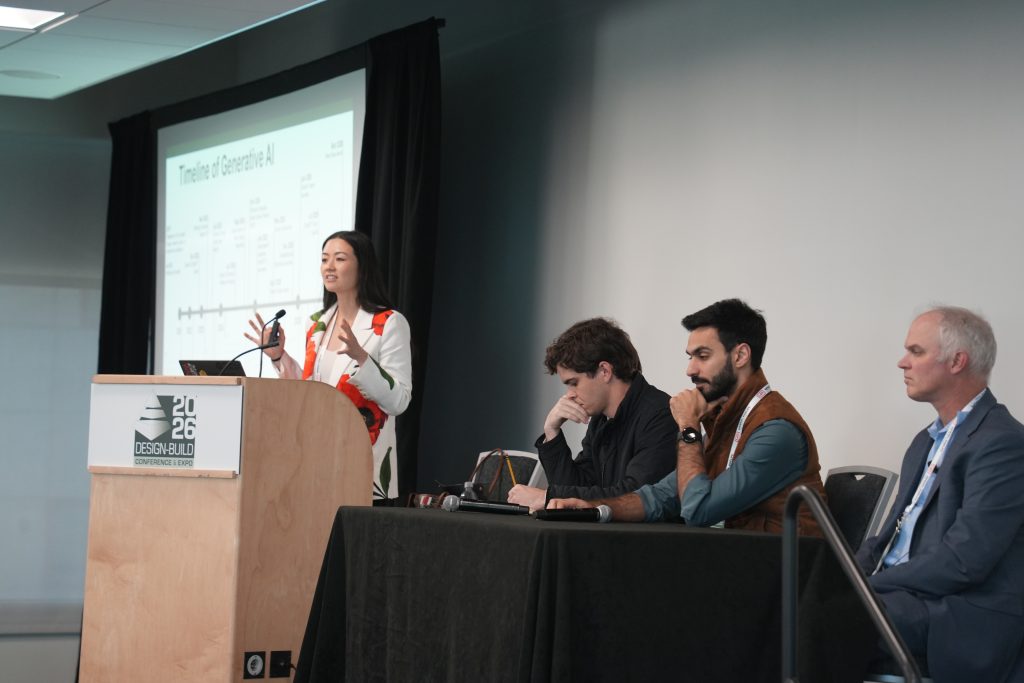
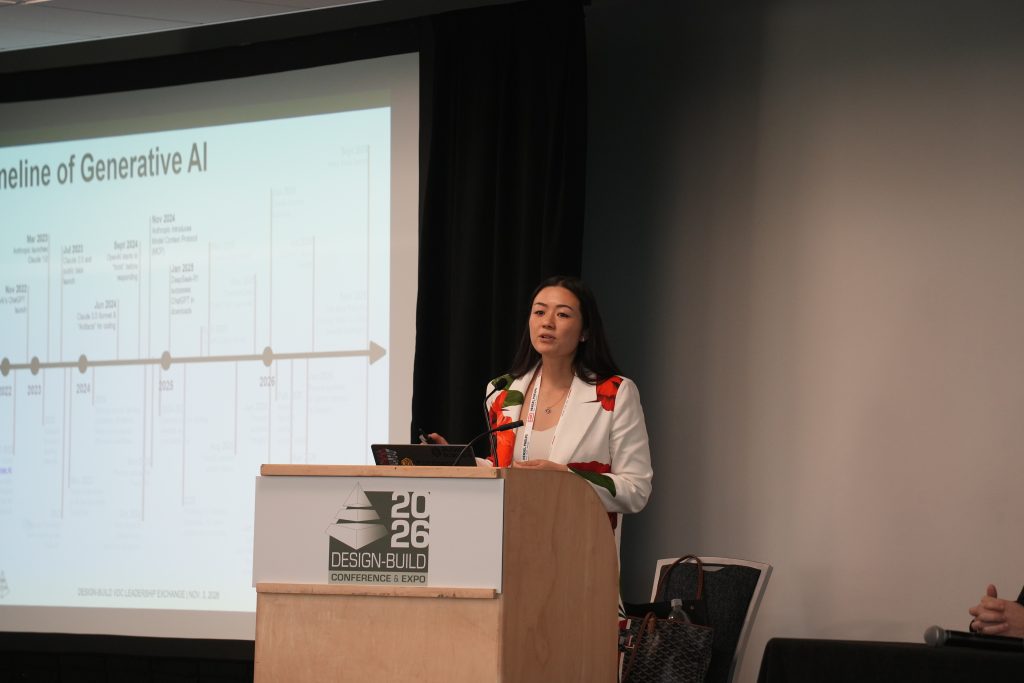
The second VDC Deep Dive put the rapid evolution of AI in construction into perspective. Alice Leung, principal at Brick & Mortar Ventures, traced a timeline beginning with companies such as Toric and Document Crunch in 2019 and Togal.AI in 2020. She then explored the development of generative, agentic and physical AI following Anthropic’s founding in 2021, including newer applications such as Kantiv’s AI tools for AEC pursuits.
More recently, that evolution has extended to major partnerships and acquisitions. Examples include McCarthy Building Companies’ partnership with Palantir, Procore’s acquisition of Datagrid (formerly Toric) and Autodesk’s announcement of new agentic AI capabilities for AEC.
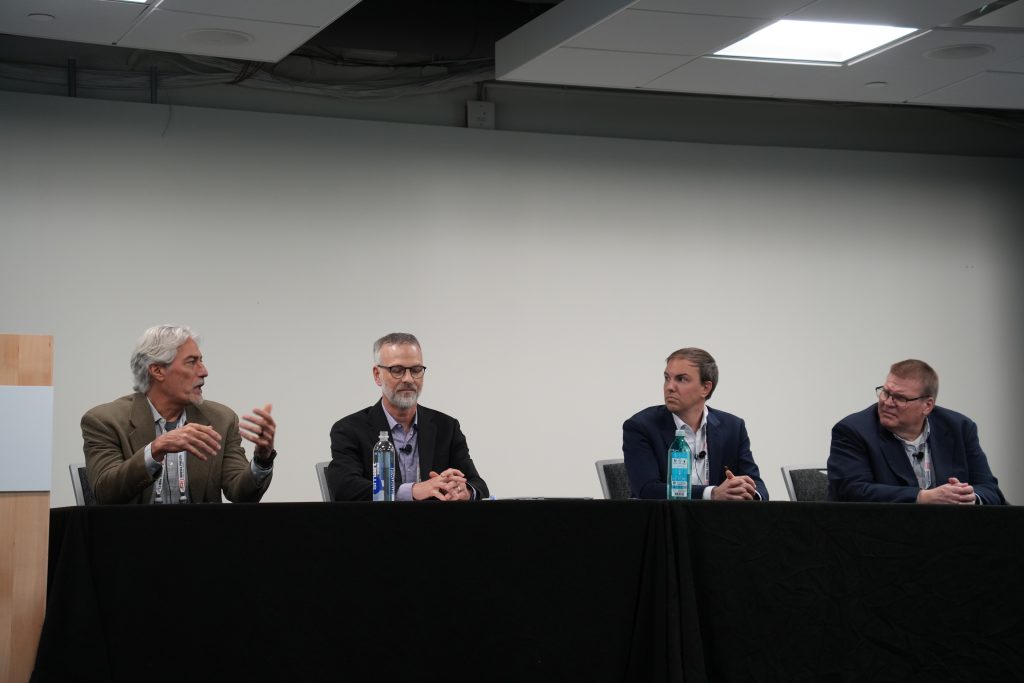
The discussion continued with innovation leaders representing design (IMEG), trade partners (Rosendin Electric) and design-builders (Brasfield & Gorrie). Hearing their different perspectives provided a useful reality check on where AI is delivering practical value for design-build teams today and where the marketing may be ahead of the results.
VDC for Non-VDC Professionals Track
Connected Teams, Better Outcomes: VDC Progressive Design-Build Synergy for Adaptive Reuse
During the VDC for Non-VDC Professionals track, panelists from Whiting-Turner, SmithGroup and FB Harding shared how VDC and progressive design-build supported real-time collaboration throughout an adaptive reuse project.
The approach also helped establish trust among project partners.
“[Live model sharing] really created a level of trust that would not have taken place without the use of Progressive Design-Build,” said Brittany Giel, VDC Manager at The Whiting-Turner Contracting Company.
That collaboration contributed to an accelerated schedule. The team completed the project in approximately 26 months, compared with an estimated 41 months under a typical construction manager-at-risk approach, which would not have met the Owner’s schedule.
RFIs associated with the collaborative VDC process accounted for approximately 17% of the total and were answered in an average of nine days, compared with 14 days for other RFIs.
Early trade engagement and offsite fabrication also produced measurable savings. Prefabricating more than 5,000 feet of conduit 1.5 inches in diameter and larger reduced onsite installation time by approximately 40%. Offsite fabrication of busduct risers saved another eight weeks in the field.
Extreme Modeling and Coordination to Eliminate Deferred Submittals
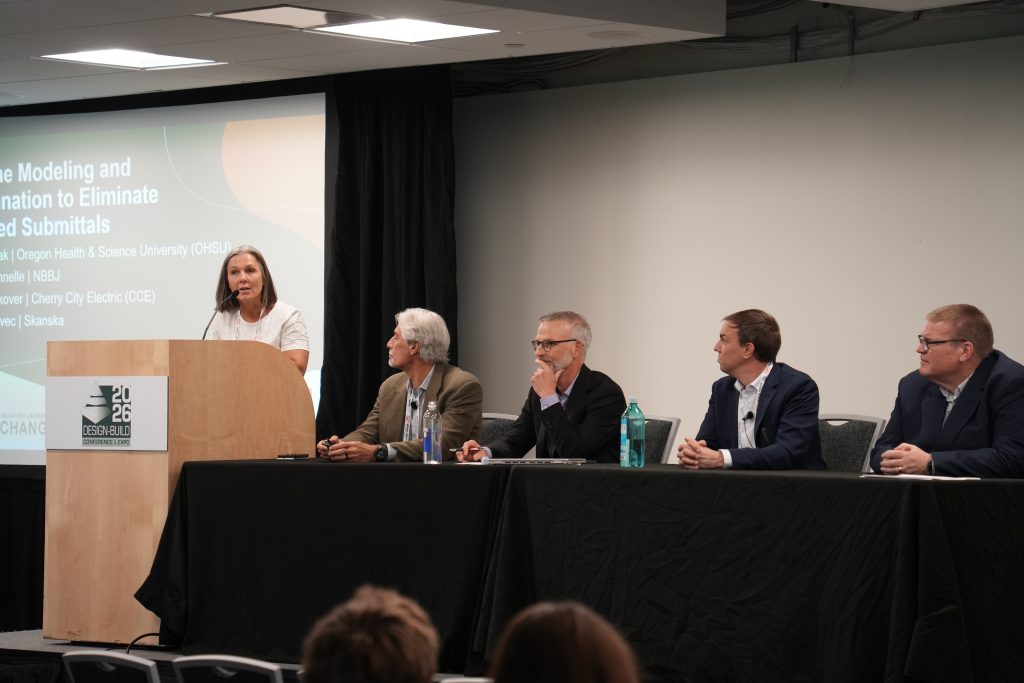
The final session in this track brought together Oregon Health & Science University and its project team from NBBJ, Cherry City Electric and Skanska to discuss a different approach to deferred submittals: completing them before submitting the building permit package.
The team shifted funding from the construction phase into design, allowing submittals and shop drawings to be prepared earlier in the project. During design, the team engaged its MEP trade partners to develop model elements beyond the traditional LOD 200 or 300 scope for the engineer of record. As a result, the team completed detailing by the time of permit submission rather than during installation.
That earlier detailing allowed the team to coordinate more extensively during design, contributing to a reported 79% reduction in RFIs. Of those submitted, 55% sought clarification only and 97% received responses within five days.
The results offered a compelling example of how moving detailing earlier in the project can improve delivery.
Closing General Session: Breaking Down Silos in VDC Integration Across the Design-Build Life Cycle
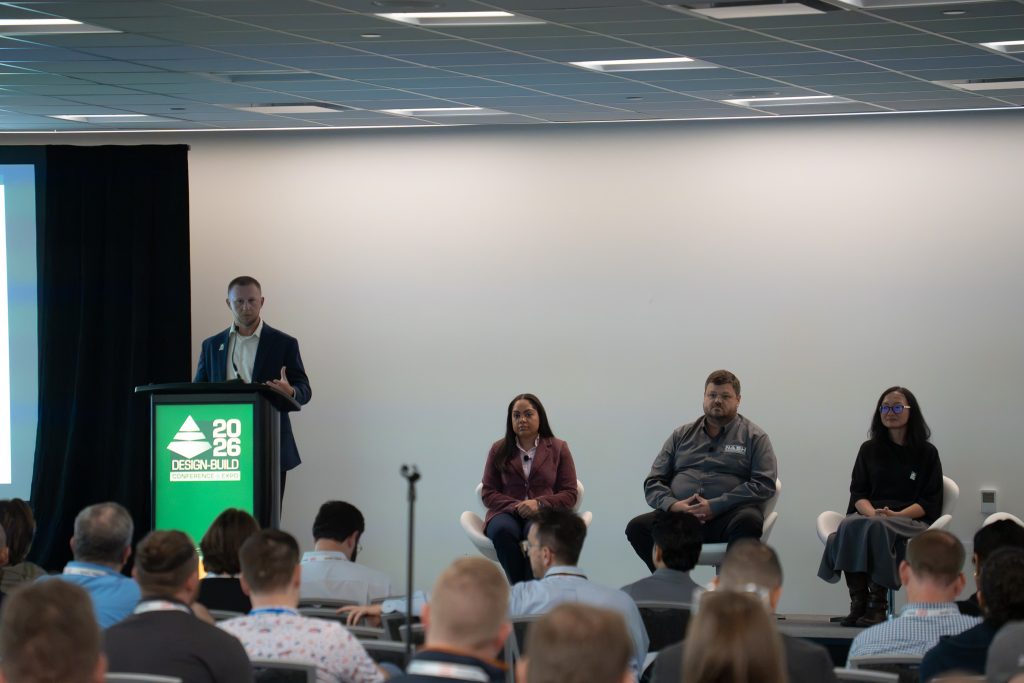
The closing general session brought together leaders from Hensel Phelps, SmithGroup and Nash Plumbing and Mechanical to discuss how teams can engage VDC throughout design-build delivery rather than treating it as a downstream coordination function.
Taking a cue from America’s favorite quiz show, the panelists had some fun with the format, using a Jeopardy!-style board to guide the conversation. Categories included Design Intent vs. Constructability, BIM-Based Decision Management, Model Ownership and, of course, VDC Process Integration.
The discussion emphasized establishing clear expectations for model use and information handoffs to reduce rework, allowing teams to better visualize and evaluate design options while addressing constructability.
They also reinforced the importance of continued VDC engagement throughout delivery. Panelists explored how early VDC engagement can improve cost and schedule performance, manage risk and support design excellence.
Looking Ahead to Next Year
“It’s hard to believe we’ve already hosted our fourth VDCLEx,” Skripac said. “It’s exciting to see how much the conversation has grown. BIM and VDC have become staples of design-build delivery, and we’re continuing to see new ways technology can improve project outcomes.”
DBIA will continue exploring these developments through future events and best-practice resources. See more from the 2026 VDCLEx in our SmugMug Photo Album.
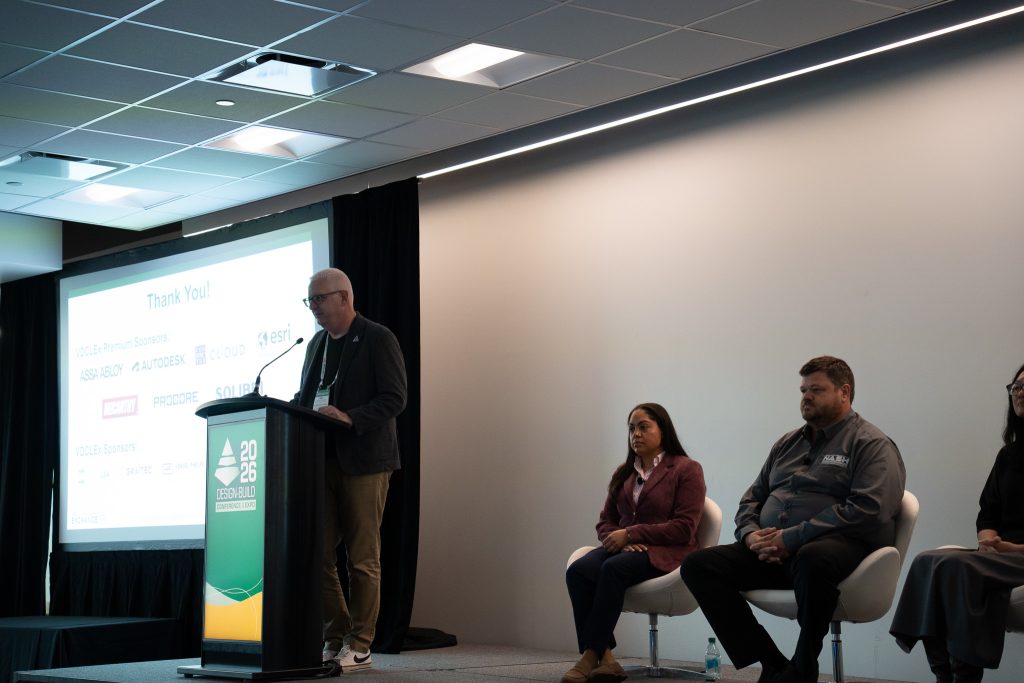
DBIA thanks all presenters, attendees and sponsors for another successful VDCLEx. We look forward to continuing the digital innovation conversation throughout the year and seeing everyone in Kansas City in 2027.
VDCLEx Premium Sponsors