Following Hurricane Helene, severe flooding and erosion sent unprecedented levels of sediment into Asheville’s Burnett Reservoir, forcing the shutdown of the North Fork Water Treatment Plant and putting the city’s primary drinking water source for more than 150,000 residents out of service. The U.S. Army Corps of Engineers and the City of Asheville turned to design-build for a rapid and flexible solution to restore this critical community resource.
The resulting Mobile Turbidity Reduction System (MTRS) treated 25 million gallons per day (MGD), reducing raw water turbidity in the reservoir by more than 98%, from greater than 100 Nephelometric Turbidity Unit (NTU) to approximately 1.5 NTU, allowing the water treatment plant to continue normal operations.
Design-Build Enables Rapid Emergency Delivery
Design-build was selected because conventional design, testing, procurement and construction sequencing could not meet the emergency schedule. Within four days of award, the team mobilized quickly and deployed leadership from all disciplines and crews from around the country to establish an integrated on-site team that enabled immediate resolution of design conflicts, allowed for rapid procurement decisions and managed risk in real time. Design-build also allowed concurrent design, procurement, construction and commissioning, eliminating traditional handoffs and dramatically compressing the schedule.
The team worked around the clock and engaged with key trades and suppliers immediately. As a result, all major materials were delivered onsite within days of project initiation. The system incorporated 13 mobile dissolved air flotation (DAF) treatment units, which provided 25 MGD of temporary water treatment capacity. The system was installed in 23 days, and clarified water was delivered 42 days after the Notice to Proceed.
Restoring potable water access allowed residents, hospitals, emergency responders, businesses and other essential services to return to normal activity, while supporting Ashville’s broader economic recovery, including tourism. The temporary system also reduced sediment loading and protected existing treatment infrastructure.
That rapid restoration demonstrates the value of design-build when communities need mission-critical infrastructure delivered under extreme emergency conditions and conventional project delivery timelines simply aren’t viable.
Design-Build Team
| Client/Owner: | United States Army Corps of Engineers – Wilmington District |
| Design-Builder: | Ahtna USA CDM JV |
| General Contractor: | Ahtna USA CDM JV |
| Engineer: | CDM Smith |
| Project Cost: | $50,954,124 |
| Construction Duration: | 9 months |
Photos
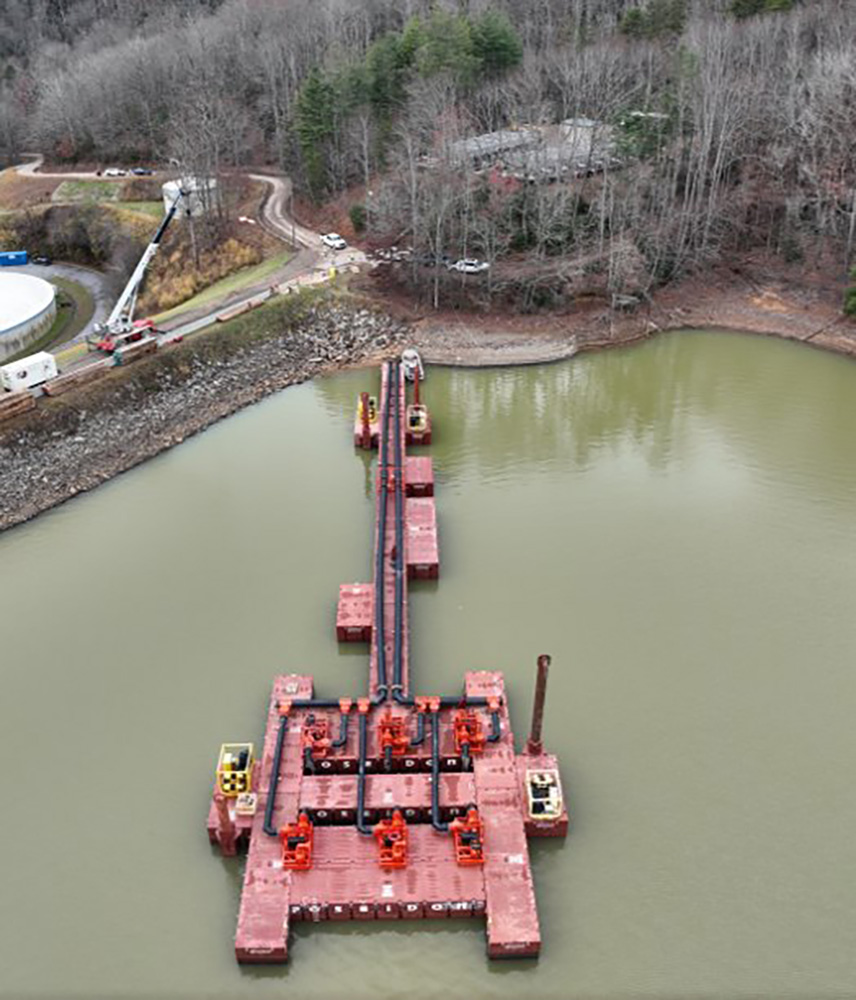
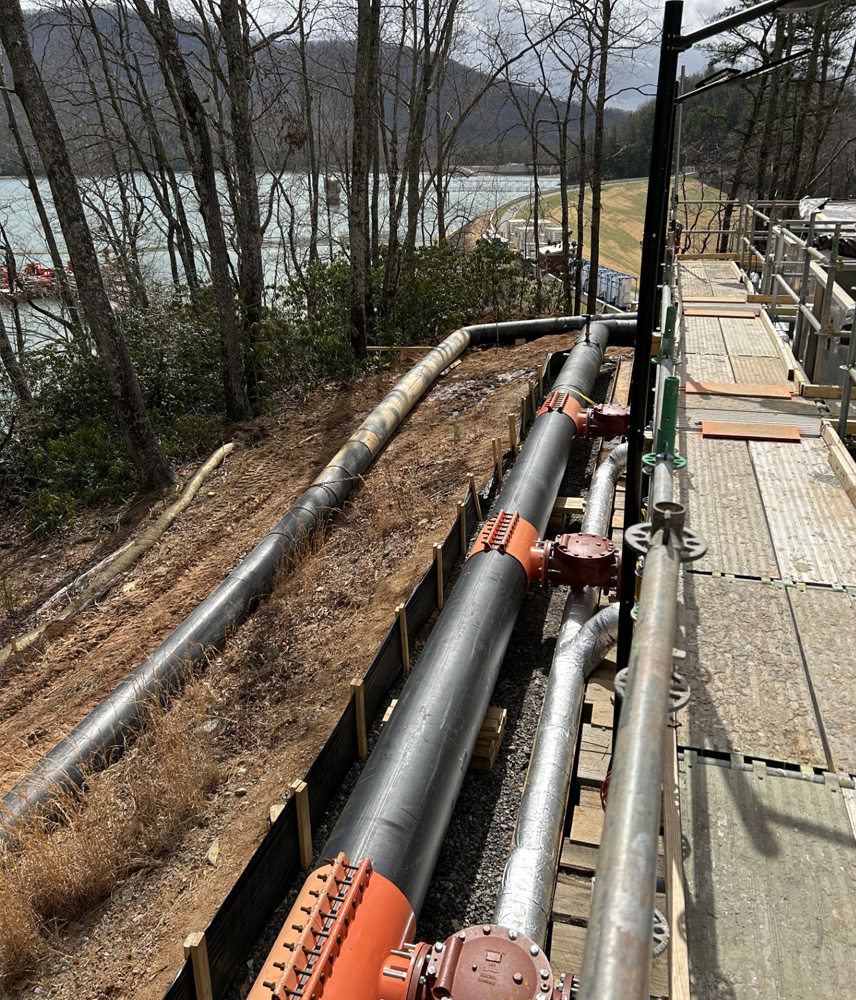
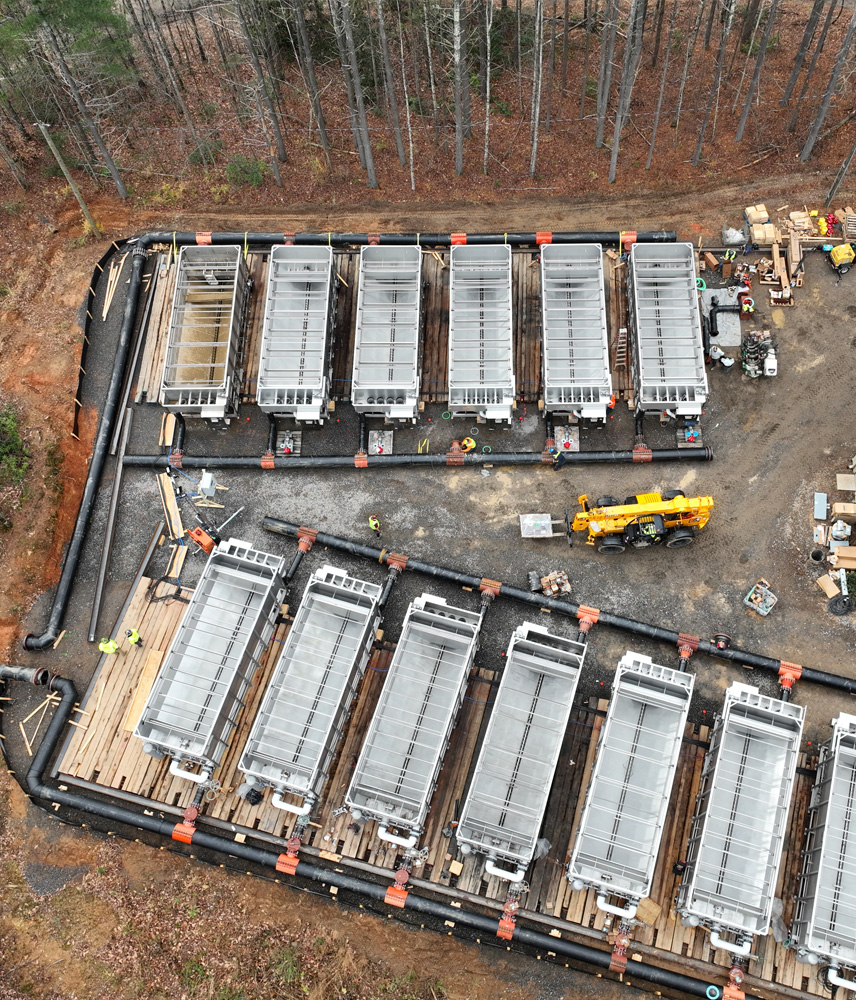
Photo Credits: Kelly Roach