
The Redmond Technology Station (RTS) Pedestrian Bridge was developed to improve connectivity across State Route 520 (SR520), linking Microsoft’s East and West Campuses, Sound Transit’s Redmond Technology Station and the SR520 regional bike trail. By providing a safe and accessible alternative to vehicle travel, it encourages walking, cycling and transit use, easing congestion and lowering carbon emissions. The bridge also supports Microsoft’s Campus Modernization and the East Link Light Rail expansion, creating a critical connection for both the corporate campus and the wider Redmond community.
Designed to blend with its surroundings, the bridge draws inspiration from nearby mountain ranges. A white tensile fabric canopy supported by alternating steel members provides weather protection while integrating with a rain garden system for stormwater management. Safety and accessibility features include separate pedestrian and bike paths, tactile paving and under-canopy lighting. Planter beds and landscaping with native vegetation create an inviting park-like feel, transforming the bridge into a beautiful public space that encourages uses beyond commuting. Additionally, its low-maintenance materials reduce long-term operational costs for the City of Redmond.
Collaborative Delivery Overcomes Project Complexity and Challenges
The project’s success stemmed from a highly collaborative design-build approach involving Microsoft, Sound Transit, the City of Redmond and WSDOT. Early integration of design and construction enabled faster decision-making, efficient problem-solving and alignment of the project’s functional, aesthetic and sustainability goals. Real-time coordination meetings helped stakeholders address challenges such as the COVID-19 pandemic, a regional concrete supply strike and a carpenter strike — delivering the project on time and on budget despite these disruptions.
Complex construction requirements, including spanning eight lanes of SR520 and active light rail tracks, were addressed through careful risk management, traffic control plans and prefabrication of key elements. Building Information Modeling (BIM) and Virtual Design and Construction (VDC) tools allowed the team to visualize the bridge in detail, identify conflicts early and optimize material use.
This integration of technology and design-build delivery resulted in a landmark public-private infrastructure project that strengthens Redmond’s transportation network, promotes low-carbon commuting, creates a community gathering space and sets a benchmark for future projects.
Design-Build Team
| Client/Owner: | Microsoft |
| Owner Advisor: | HNTB |
| Design-Builder: | Kiewit Infrastructure West Co. |
| Architects: | AECOM; FTL Design Engineering Studio; WATT |
| Engineers: | Kiewit Infrastructure West Co.; Delve Underground (Formerly MJA) |
| Subcontractors: | SITU; Quick Crete Products Corp.; FD Thomas; Belarde |
| Construction Duration: | 48 Months |
Photos
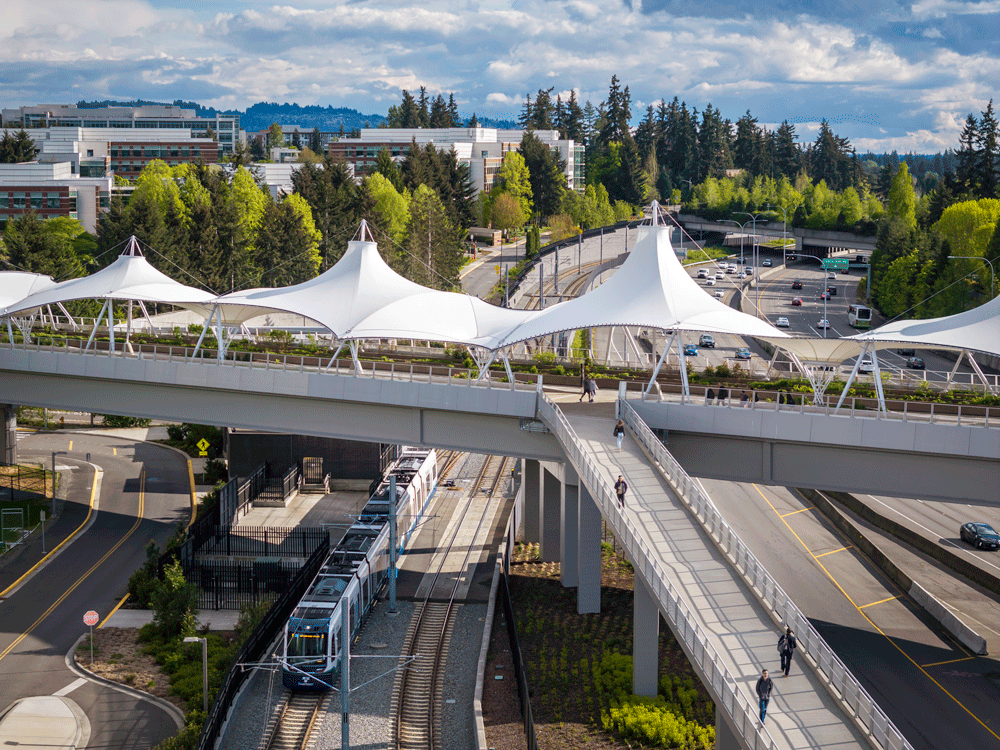
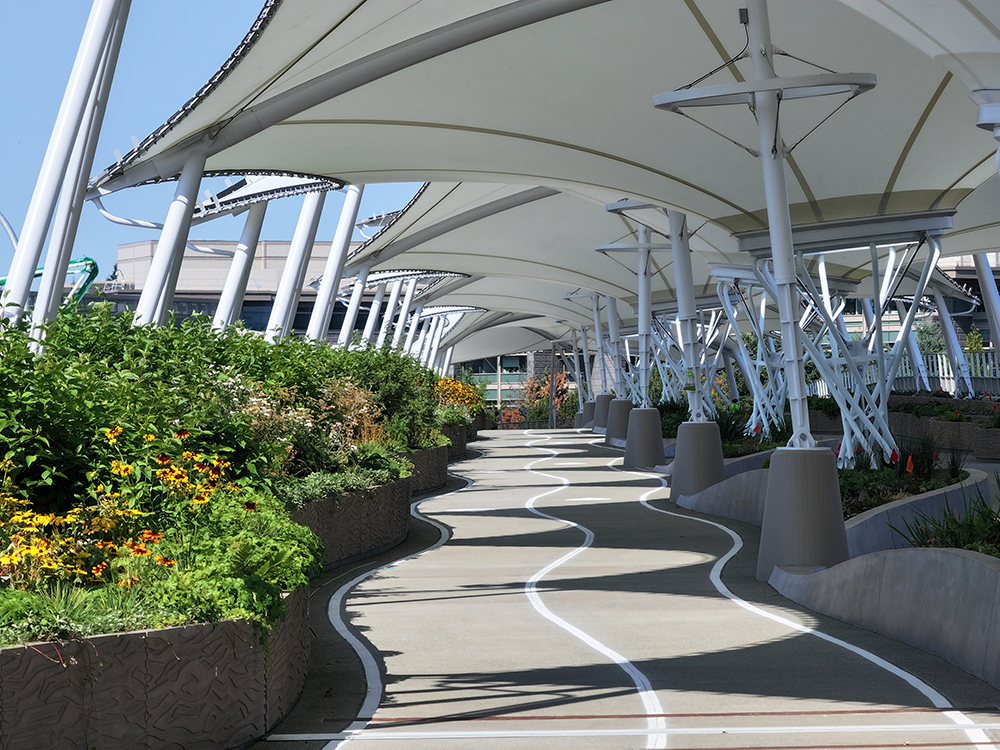
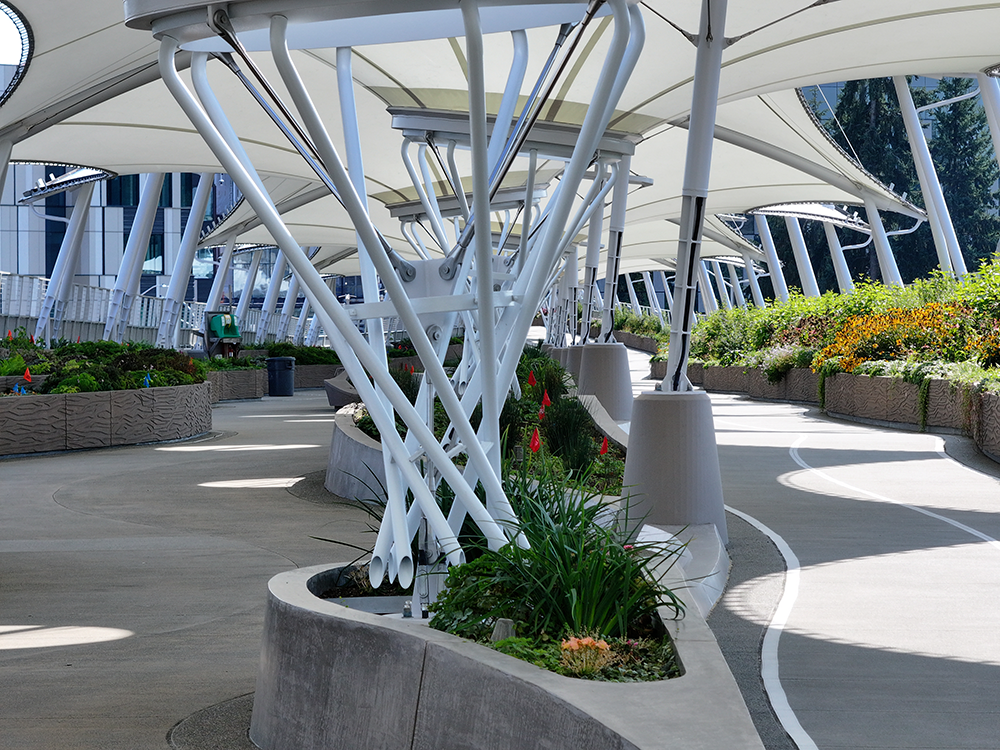
Photo Credit: Kiewit