The findings of Revizto’s 2026 Bridging the Gap report, drawn from 2,000 AEC professionals across eight global markets, suggest that the industry is arriving at a shared conclusion. How teams are structured and connected matters as much as the tools they use, and design-build teams are well-positioned to lead the way.
The Complexity Surge is Real
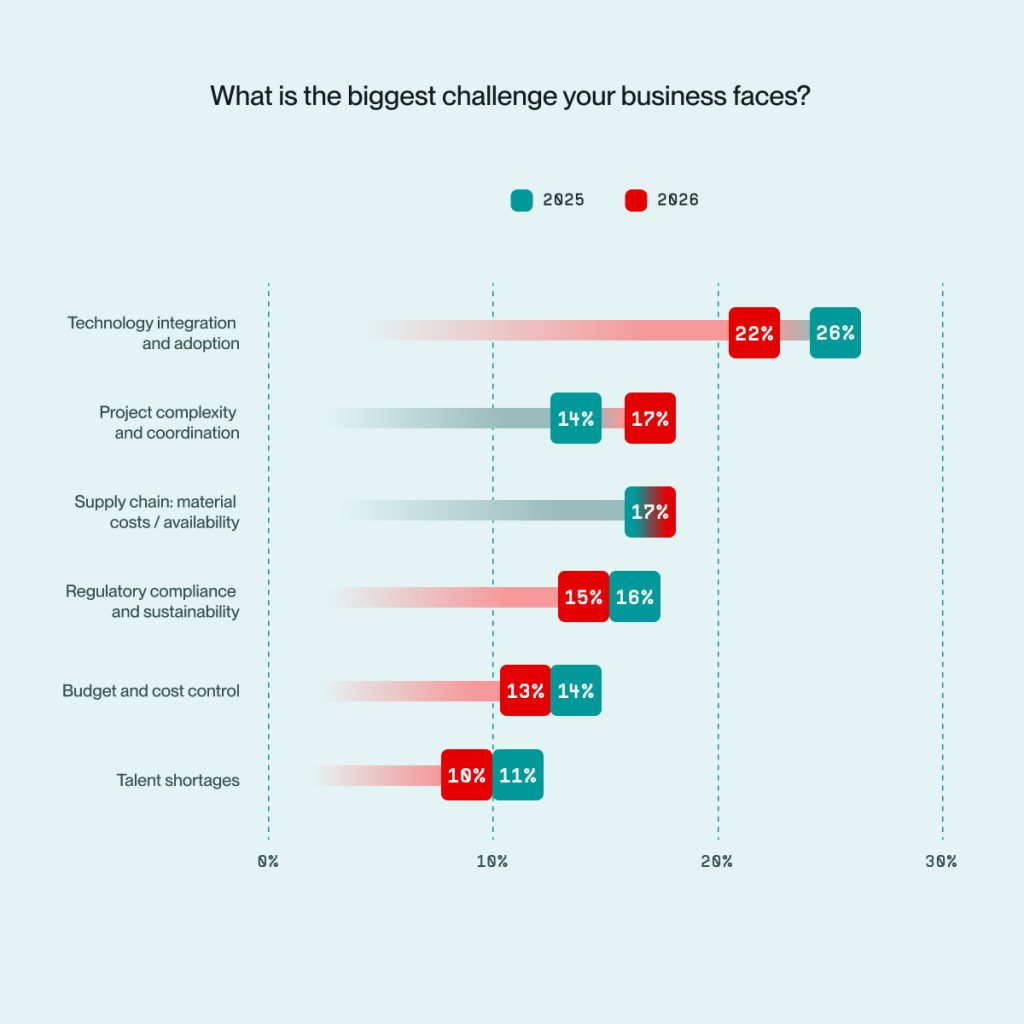
Project complexity and coordination ranked as a top industry challenge in the 2026 report, climbing from fifth place in 2025 to a tie for second. Technology integration and adoption remains at the top of the list for the second consecutive year, outranking budget control, talent shortages and supply chain volatility. That many teams are responding by simplifying workflows rather than adding new tools indicates the primary struggle is how to make existing tools work together.
Rework Is a Process Failure, Not a Site Condition
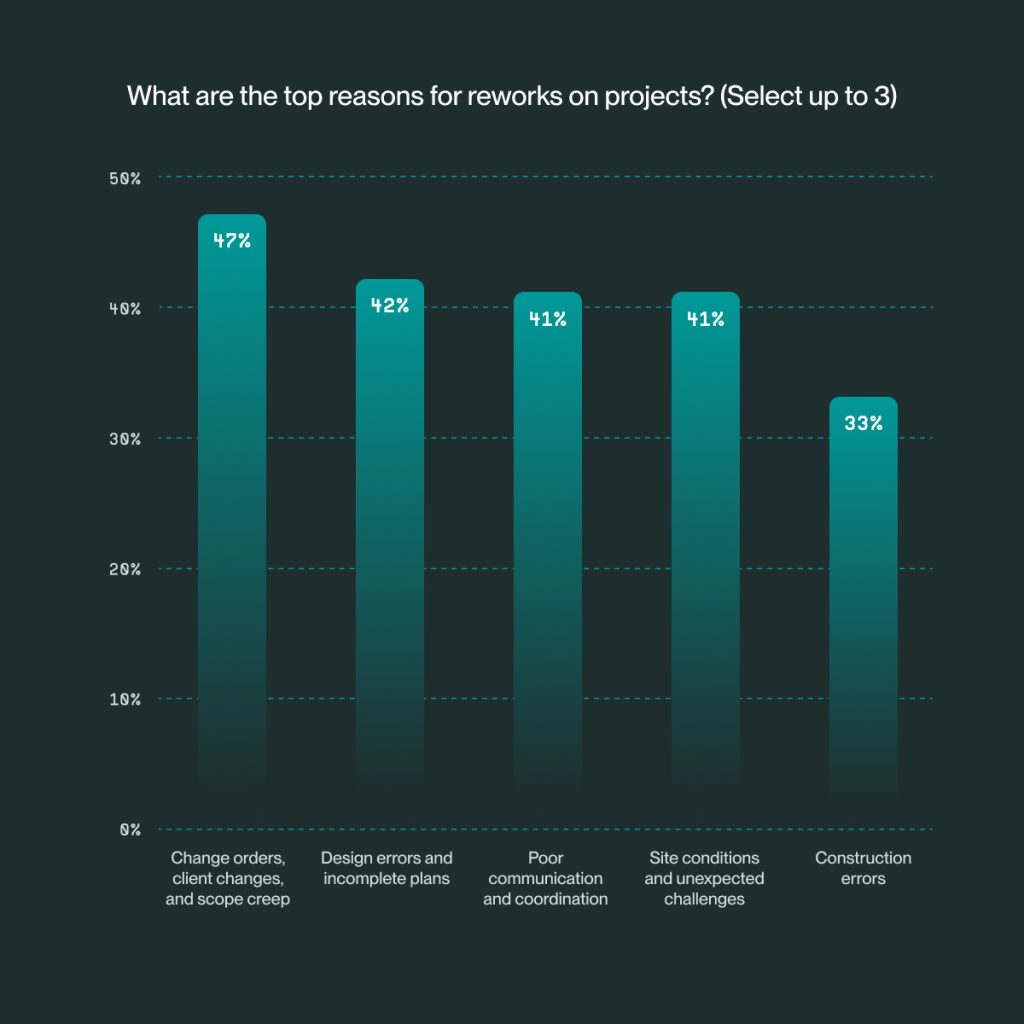
One of the report’s most striking findings challenges a long-held assumption about where things go wrong on construction projects. Site conditions have dropped sharply as a driver of rework –– from 53% of respondents in 2025 to 41% today –– while design errors, incomplete plans and poor communication and coordination have emerged as the dominant causes.
Sal D’Ambrosia, Director of Construction Technology at Wm. Blanchard Co., explained, “Technology integration often gets blamed, but in my experience the real challenge is people integration. Rework, budget overruns and coordination failures usually come down to alignment between designers, trades and Owners. When those groups collaborate early through approaches like design-assist or design-build, the technology works, the budget reflects the value and projects move forward with far less friction.”
His point echoes DBIA’s established guidance on the role of the VDC Leader as the key team member ensuring BIM and VDC tools enhance rather than disrupt the project chain of command. Rework is increasingly recognized as a self-inflicted wound, and that means it is preventable.
Time Is the Real Barrier to Adoption
For the second consecutive year, time is the number one barrier to technology adoption, cited by 32% of respondents. Specifically, the report indicates time needed for implementation and training as an obstacle. Cost ranks last, cited by only 18%, down from 21% in 2025.
The VDC Leader’s role is explicitly designed to absorb the coordination burden so the broader team doesn’t have to pause execution to figure out the tools.
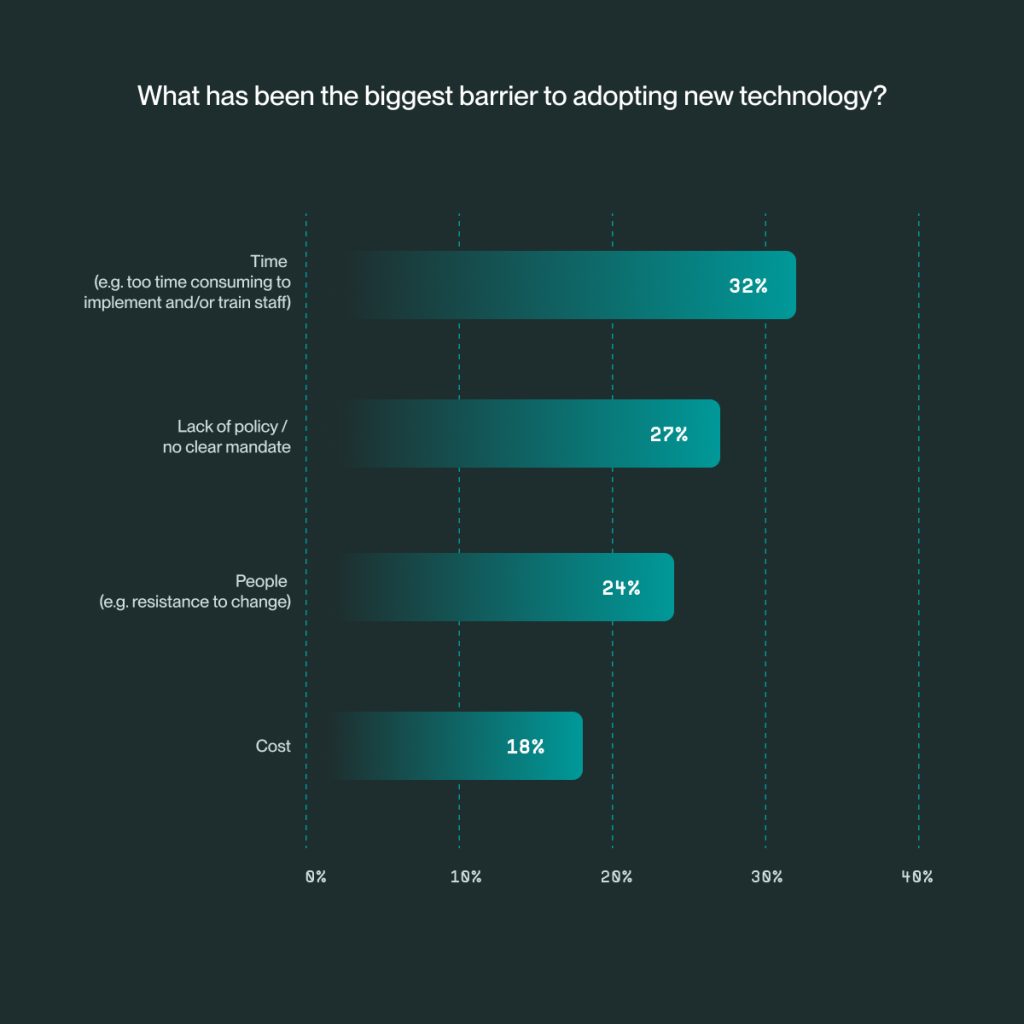
The second-biggest barrier is a lack of policy or mandate, cited by 27% of respondents. In design-build, the VDC Execution Plan and the DBIA BIM Exhibit provide exactly that mandate, aligning the entire team from day one and removing the ambiguity that stalls adoption elsewhere.
The 2D Habit and the Coordination Gap
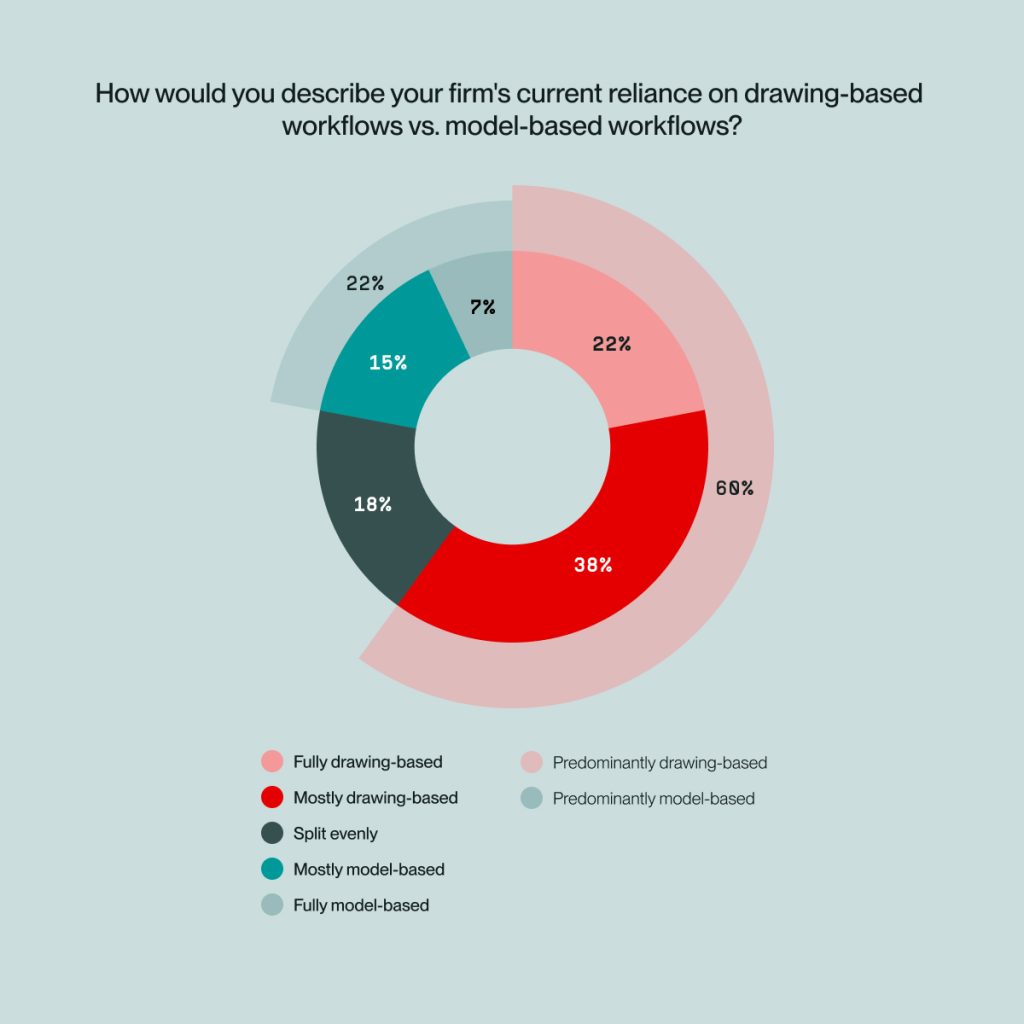
Despite widespread BIM investment, 60% of firms still rely primarily on 2D workflows and only 22% describe their practice as mostly or fully model-based. When teams are working from flat PDF sets, spatial interpretation errors multiply and those errors show up directly in the rework figures above. The DBIA Virtual Design & Construction Primer emphasizes multi-disciplinary coordination, clash detection and 4D schedule integration as a direct prescription for this problem.
The Missing Voice: Owners
Owners were not included in the respondent pool as targeting is quite challenging. Yet the coordination failures the data describes are often felt most acutely by the people who operate a facility long after the project team has moved on.
At Revizto’s Made Right Conference earlier this year, Steve Klein and Aaron Lepley, senior engineers leading VDC and digital delivery at Mars Snacking, offered a perspective that reframes the coordination conversation entirely. As an Owner managing a portfolio of manufacturing facilities, Mars doesn’t need BIM simply to close out a project. It needs BIM as the foundation of a long-term data lifecycle that informs maintenance, future expansions and operational planning for decades.
During his keynote presentation, Lepley said, “If you’re a design partner, help the Owner use the model. Don’t just treat it as a deliverable. If you’re a GC, treat the model as a shared language, not just something you use for quantity takeoffs. And if you’re an Owner, use all of the information that you have available to you. Feed your data lifecycle. Learn from your data.”
For design-build teams, this is a natural extension of the integrated delivery mandate. Early alignment ensures Owners are active participants in the coordination process from the start rather than recipients of a handoff at the end.
The Coordination Imperative
The 2026 data makes one thing clear: the capacity to perform already exists inside most AEC firms. When asked how they are closing the digital skills gap, more respondents pointed to simplifying workflows and upskilling existing staff than to hiring new talent. The industry cannot hire its way to better outcomes, and it knows it.
What separates the firms pulling ahead is structure, leadership and the discipline to treat coordination as a continuous priority. For DBIA members, that is not a new idea. It is the promise of design-build.
Download the full report at revizto.com
Revizto is revolutionizing collaboration across the AECO industry. Helping architects, engineers, contractors, and owners deliver projects on time and on budget, without risk or waste.