This is Part 2 of DBIA’s four-part Design-Build in Times of Crisis series, examining how design-build teams respond when the stakes are highest, when lives, economies and essential services are on the line. In Part 1, we traced how design-build first emerged as a vital tool in emergency recovery. In this installment, we move from those early milestones to today’s most complex disaster responses, where urgency, uncertainty and community impact demand more than speed alone. Part 3 examines how design-build performs when aging infrastructure fails and how forward-looking Owners strengthen essential systems before a crisis hits. The final installment looks ahead to the future of design-build in crisis response as agencies and teams build greater resilience in the face of growing risk.
Design-build’s legacy in urgent recovery is rooted in execution under pressure, evidenced by projects like the I-35W St. Anthony Falls Bridge rebuild and Pentagon’s Phoenix Project discussed in Part 1. When Owners, designers and builders act as one team, speed and discipline align, and projects move forward when they matter most. That legacy now meets a new era of disruption defined by compounding crises that demand faster decisions, tighter coordination and resilience built from the outset.
Today’s challenges span storm-damaged coastlines, failing infrastructure systems, supply chain volatility and workforce strain, but the core question remains unchanged: how do you deliver with confidence when every hour counts?
Across the country, teams are answering that question under extraordinary pressure. From coastal rebuilds to inland emergencies to post-pandemic system strain, design-build has restored lifelines, accelerated recovery and strengthened communities.
As conditions shift and crises grow more complex, design-build continues to adapt alongside them.
From Impact to Action
These modern recovery efforts show how design-build performs under extreme pressure, where lives, access and community stability depend on how quickly teams can move.
Even as design-build has proven its value across decades of recovery, the true measure of any delivery method is what it can do under pressure when failure is not an option. Two storms in particular — Ian in Florida and Helene in Tennessee — became defining tests of whether collaborative teams could restore lifelines in radically different environments under extreme and volatile conditions. One struck an isolated island community on Florida’s Gulf Coast; the other tore through rural mountain towns in Eastern Tennessee and Western North Carolina. Both demanded fast action, clear purpose and teams who could solve problems together in real time.
Giving an Island Back Its Lifeline in Florida
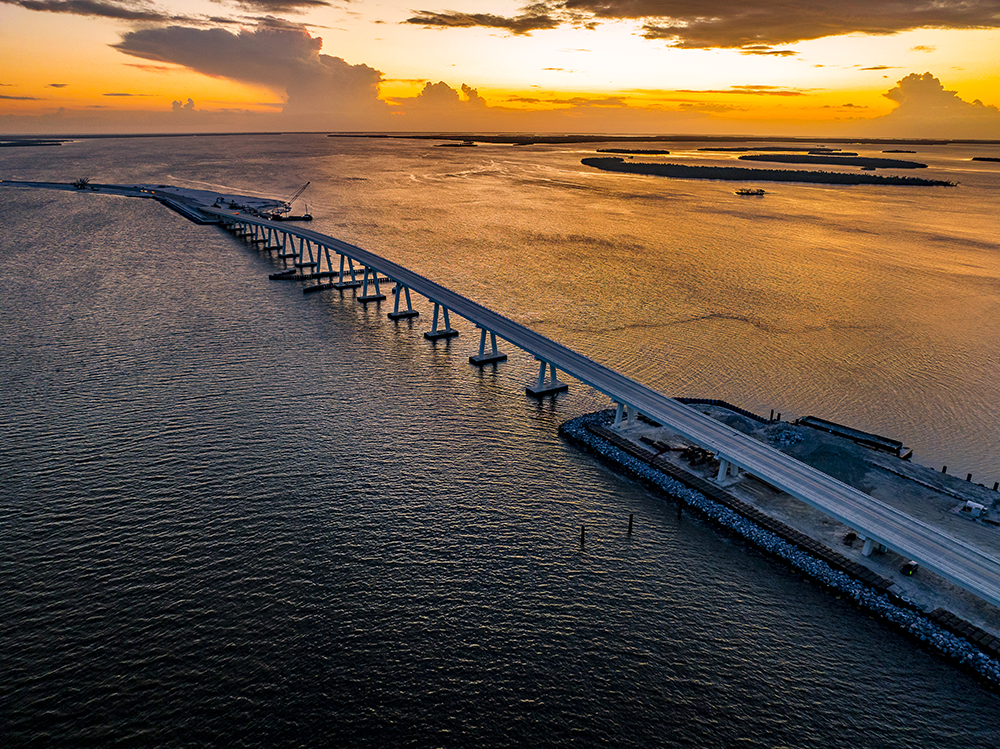
In September 2022, Hurricane Ian’s 155‑mph winds severed the Sanibel Causeway, the only link between Sanibel Island and the mainland near Fort Myers on Florida’s Gulf Coast, cutting the community off entirely. Tourism collapsed, supply lines broke and families were stranded, but within 15 days, crews restored temporary access. The full rebuild was completed in just over two years — a timeline unimaginable under traditional sequencing — and demonstrated that urgency doesn’t require shortcuts.
For Sanibel, restoring the causeway meant reuniting families, reopening access to schools and medical care and reviving a local economy pushed to the brink.
The Superior-de Moya Joint Venture, working with the Florida Department of Transportation (FDOT), pushed the limits of what rapid, coordinated recovery could look like. Crews worked around the clock, staying onsite in trailers, ferrying materials across open water and grilling meals together between shifts. They also weathered Hurricanes Debby, Helene and Milton while in the throes of rebuilding the island’s only lifeline. Under relentless conditions, the team became a stabilizing force that turned catastrophe into reconnection.
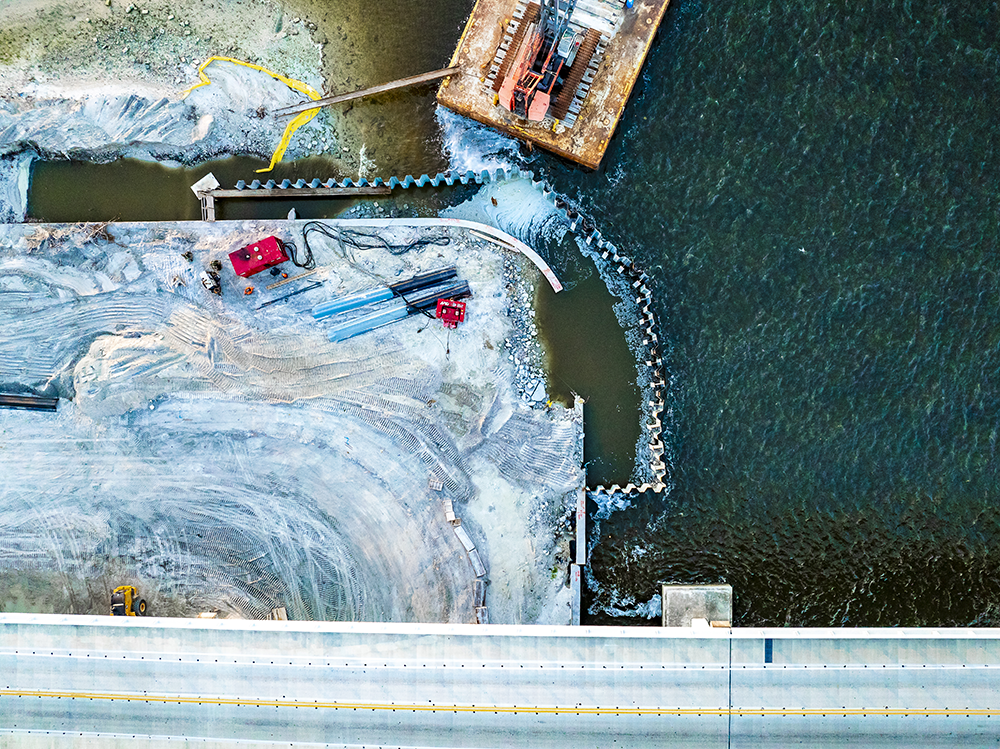
According to Superior’s Director of Alternative Delivery, J. David Nardon, DBIA, the breakthrough wasn’t just in what the team built but how they worked. “From day one, it was One Team, One Mission,” he said. Co‑location, field‑level decision authority and hourly coordination huddles allowed designers, builders and FDOT representatives to act decisively as conditions changed by the hour.
FDOT procured the work using its phased design-build process, a procurement approach that functions the same way progressive design-build (PDB) does in other states. That structure allowed the team to define scope collaboratively rather than price unknowns upfront, giving FDOT flexibility while maintaining visibility into evolving risks. Decisions were made where the work was happening, eliminating delays from traditional handoffs and formal change cycles. “We weren’t just executing a scope,” Nardon said. “We were navigating uncharted territory together.”
Sanibel’s mayor Richard Johnson thanked crews personally at an onsite barbecue, calling their work a beautiful gift to the community. The result was a restored lifeline and an upgraded connection between island and mainland, physically, economically and emotionally. In July 2025, the project received a DBIA National Merit Award in Transportation, recognizing its accelerated delivery and collaborative execution.
Sanibel showed what crisis delivery demands: unity of purpose, disciplined urgency and empowered teams. The same approach would soon be tested again, this time in the mountains of East Tennessee.
New Terrain, Same Urgency in Tennessee
In September 2024, flash flooding from Hurricane Helene devastated Western North Carolina and East Tennessee, swallowing roads, isolating communities and cutting off access to emergency services. The Tennessee Department of Transportation (TDOT) lost access along 49 routes, including two critical crossings — the Sgt. Elbert Kinser Bridge on State Route 107 and the Alfred Taylor Bridge on State Route 81 — leaving residents without reliable routes to hospitals, schools and supplies.
To jumpstart recovery, TDOT turned to Kiewit using its first-ever progressive design-build (PDB) contract. Within 72 hours, crews mobilized under a limited notice to proceed and began clearing debris, installing a temporary causeway for equipment access and launching geotechnical investigations and early design. Work began before design was finalized, compressing timelines while maintaining engineering rigor.
“We were on-site 24 hours after the flooding, and the devastation was unimaginable,” said Chris Frieberg, Tennessee Area Manager at Kiewit. “The only thing we wanted to do was help in any way we could, and that mentality drove every decision.”
Where the team on Sanibel Island fought surge and isolation at sea level, the crews rebuilding along the Nolichucky River battled steep mountain slopes, fluctuating river levels and unstable soils that tested equipment, logistics and resolve. Public pressure was intense, but so was the mission. Momentum came from embedding designers with field crews, solving problems at the source instead of waiting on sequential approvals.
That alignment delivered. Both bridges reopened more than two months ahead of schedule in May 2025 restoring essential mobility for Greene and Washington Counties.
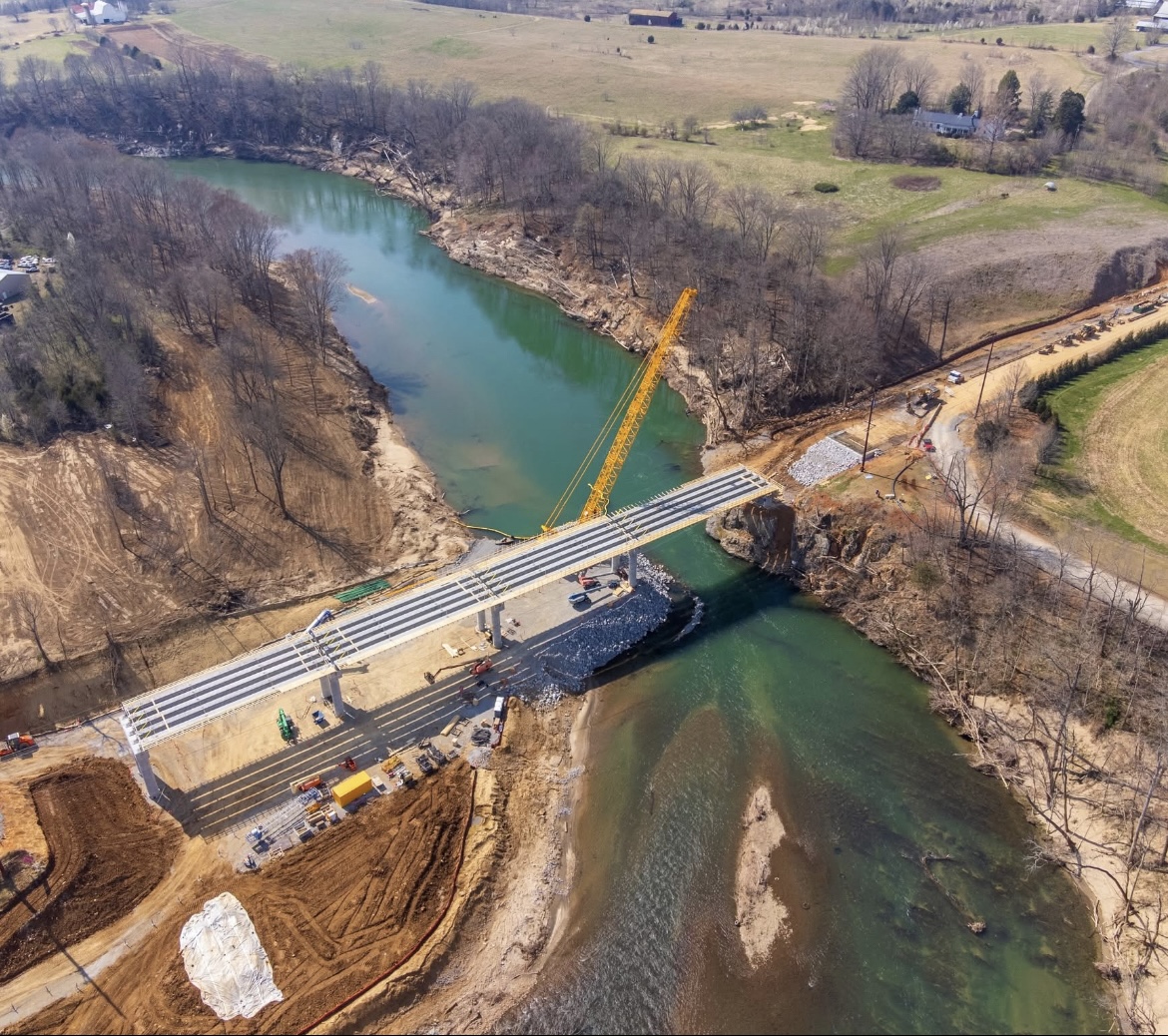
Nolichucky was defined as much by human solidarity as by engineering response. Recovery became a shared responsibility. Kiewit partnered with the Appalachia Service Project to support residents still reeling from the storm, removing fallen trees and wreckage, rebuilding porches and constructing wheelchair ramps for families like Lorene “Skeeter” Lewis, who lost her home of 40 years. “It was devastating,” Lewis said, “but seeing so many people willing to help has truly changed my perspective.”
The team also raised nearly $90,000 for local relief, with early completion incentives adding another $100,000 for community support. “We came here to build bridges,” said Project Manager Mike Svoboda, “but we also wanted to support the people who live around them.”
“The success of this project was bigger than concrete and steel,” said Frieberg. “It was about restoring trust and proving what a united team can do under pressure.”
The Nolichucky bridge rebuilding projects reinforced a now-familiar truth: crisis doesn’t wait for certainty, and neither does design-build.
Designing for Resilience, Not Just Recovery
Recovery must now evolve alongside escalating climate and infrastructure threats. Across the country, Owners are turning to design-build to build smarter, with resilience engineered in from day one.
For example, the EnwaveUSA Biomedical District Steam Plant in New Orleans anchors the city’s healthcare resilience, illustrating that preparation can be designed. Built by Burns & McDonnell after Hurricane Katrina exposed catastrophic vulnerabilities in medical infrastructure, the 26,000-square-foot plant can operate independently for seven days without external power, gas or water. Critical equipment sits above the floodplain and is protected against hurricane-force winds, allowing trauma centers and hospitals to keep operating even when the grid goes down.
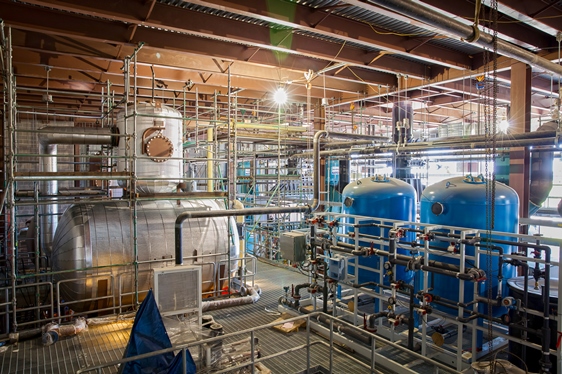
This project marked a deliberate shift to readiness, redefining expectations for mission-critical infrastructure. The design-build team reworked major systems late in delivery, including a 90-degree building reorientation, without losing schedule momentum. That flexibility came from continuous alignment between Owner, designer and builder, a defining trait of design-build. The result is hardened infrastructure that keeps a city functioning under extreme conditions. in 2015, the EnwaveUSA Biomedical District Steam Plant received a DBIA Project/Team Merit Award for Industrial/Process/Research Facilities.
The EnwaveUSA plant also signaled a turning point. Resilience could no longer be treated as an afterthought added during recovery. It must be a design priority from the start. Nowhere has that shift been more visible than along America’s most vulnerable coasts.
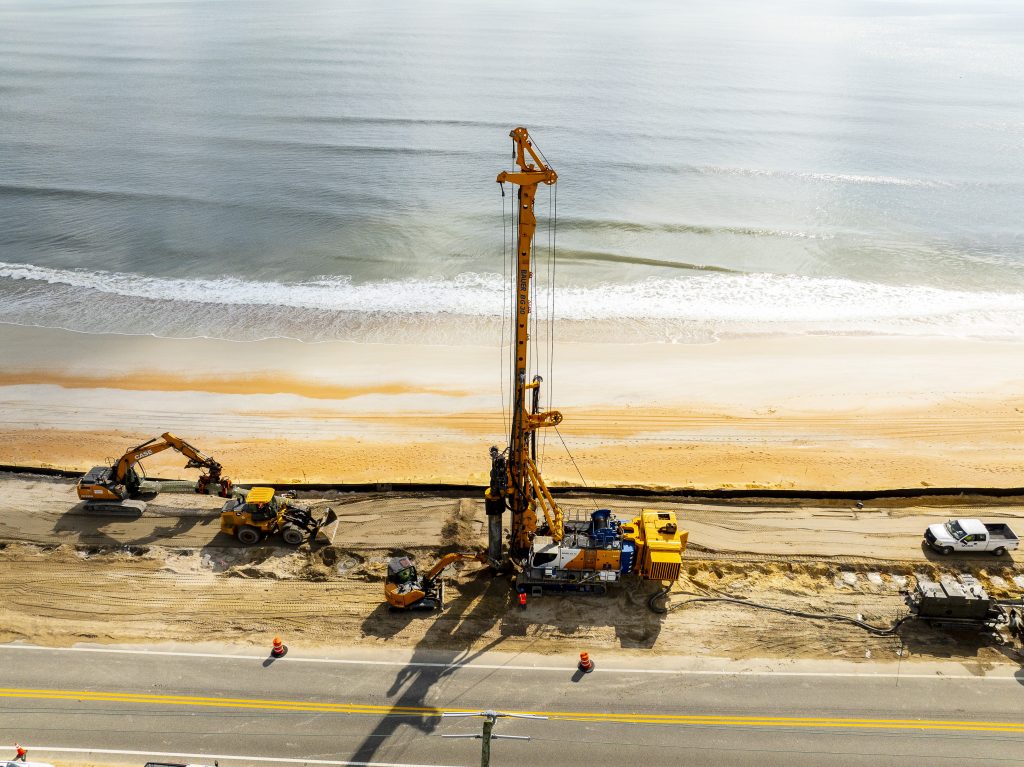
Along State Road A1A in Flagler County, Florida, repeated Atlantic hurricanes chewed away massive sections of roadway and protective dunes. Instead of another temporary repair, in 2023, FDOT launched a $117 million coastal resilience effort using design-build to accelerate permanent protection. The team, also from Superior Construction, engineered buried seawalls, installed advanced drainage and restored 65,000 cubic yards of dunes, strengthening natural defenses while safeguarding the region’s only hurricane evacuation route.
In nearby Summer Haven, the challenge carried deep community impact. After Hurricane Matthew severely damaged Old Highway A1A in 2016, residents relied on a temporary sand path for nearly eight years. Superior Construction and design partner DRMP delivered a permanent solution through a phased design-build approach, rebuilding and fortifying the roadway while maintaining 100% resident access throughout construction.
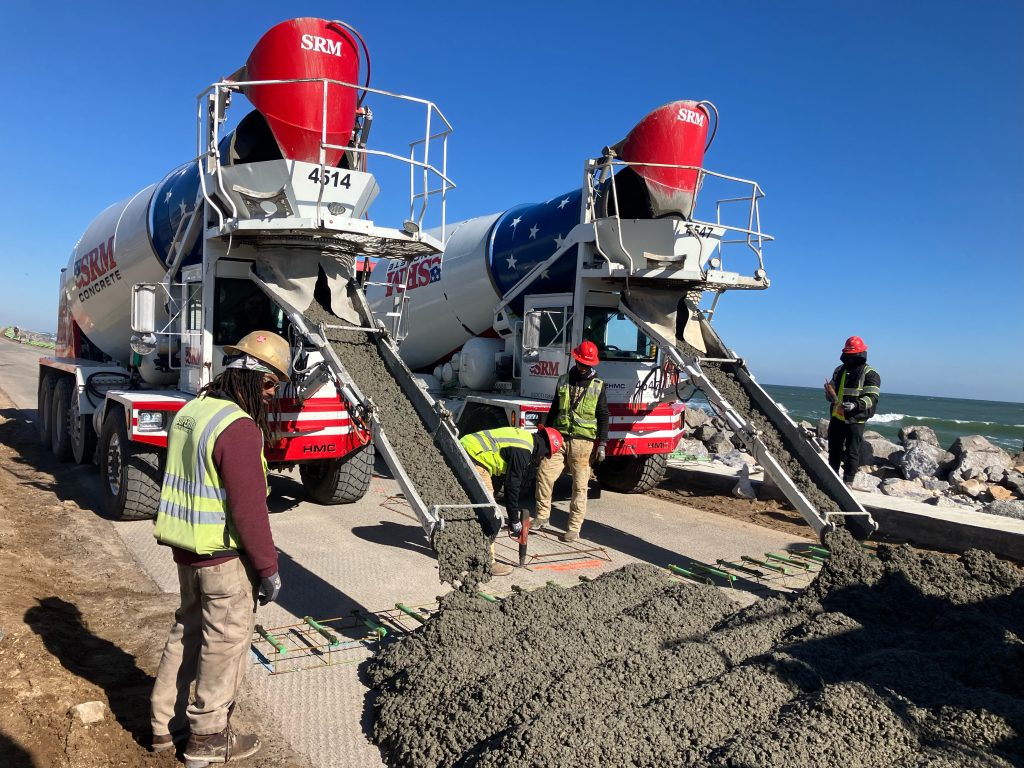
The reinforced design includes 2,000 linear feet of epoxy-coated sheet pile, 5,800 tons of granite revetment rock for coastal protection, an elevated concrete roadway and an advanced drainage exfiltration system engineered to manage storm surge and erosion. Much like the Sanibel project, Hurricanes Milton and Helene struck the site during construction, but completed sections remained fully intact while unfinished areas washed out, offering real-world validation of the engineering approach.
“This project is about peace of mind for the Summer Haven community,” said Project Manager Miguel Martínez of Superior Construction. “Seeing residents return to beaches they’ve enjoyed for generations, knowing their only evacuation route is secure, reminds us why resilient delivery matters.”
Building Strength Before the Next Storm
Together, these projects show how design-build’s power extends beyond emergency response to become a framework for restoring connection, rebuilding trust and engineering resilience into every stage of delivery. Whether on an island cut off from the mainland, a mountain town rebuilding in the mud or a coastal community defending its future, each team demonstrated that collaboration under pressure creates stability that endures long after the immediate crisis has passed.
As the frequency and scale of crises grow, so does the need for systems designed to adapt in real time. Design-build’s defining strength — uniting Owners, designers and builders in shared accountability — is now guiding how we plan for the next wave of disruption before it arrives.
Design-build delivers stability, momentum and collective resolve, and that capability is becoming a national imperative. With nearly half of all U.S. construction expected to be delivered using design-build by 2028, DBIA offers guidance and tools to support project teams responding to these complex challenges, from contracts to free primers and position statements, to education programming and webinars.
These projects aren’t outliers; they reflect a nationwide shift toward faster, smarter recovery. Across the country, Owners are choosing design-build to respond to emergencies and to build resilience into essential systems before a crisis hits. DBIA’s Design-Build in Times of Crisis report captures many more of these efforts now reshaping how America prepares for disruption.
In the next installment, we’ll move beyond storms and floods to the hidden failures that test our infrastructure from within. When sewers collapse, bridges fall and essential systems falter, design-build continues to provide a structure for decisive action and recovery when the stakes are highest.
Hurricane Ian Sanibel Island Access
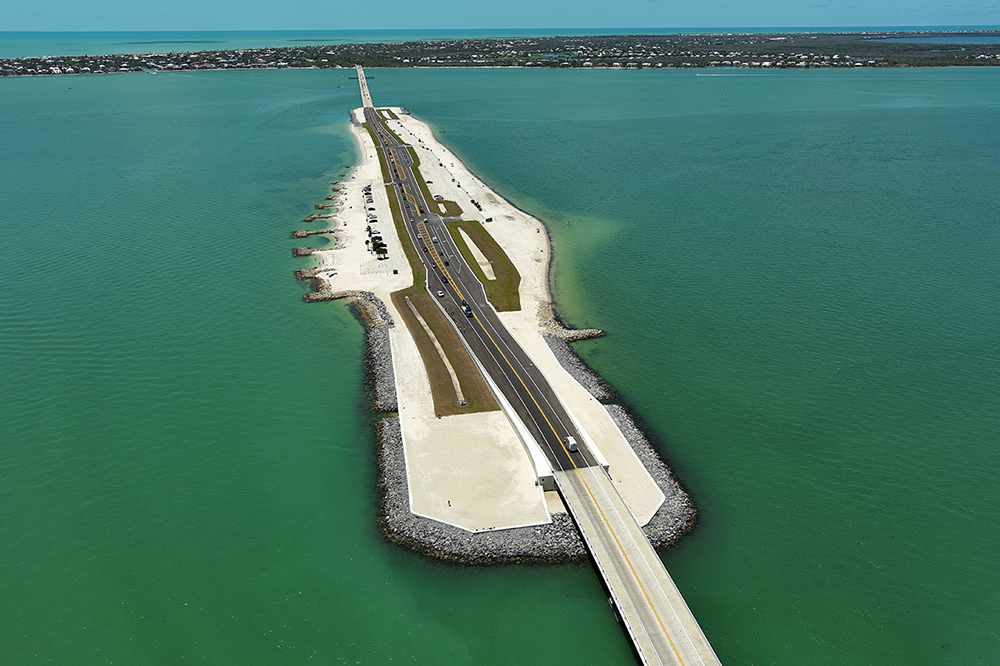
Location: Lee County, Florida
Crisis Trigger: Hurricane Ian (2022) — Causeway collapse cut off Sanibel Island
Owner: Florida Department of Transportation (FDOT)
Team: Superior–de Moya Joint Venture | FDOT | Design support teams co-located on site
Awards: 2025 DBIA National Award of Merit – Transportation
Nolichucky River Bridges (Sgt. Elbert Kinser & Alfred Taylor)
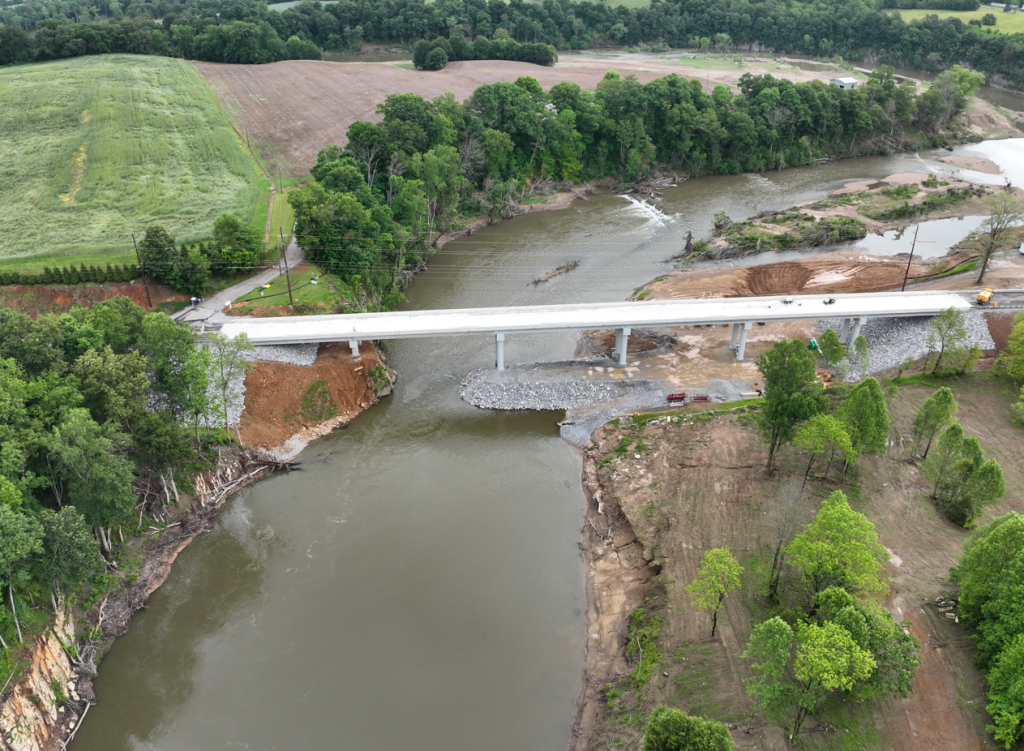
Location: Greene and Washington Counties, Tennessee
Crisis Trigger: Hurricane Helene flooding cut off multiple vital roadways in 2024
Owner: Tennessee Department of Transportation (TDOT)
Team: Kiewit Infrastructure South Co.
EnwaveUSA Biomedical District Steam Plant
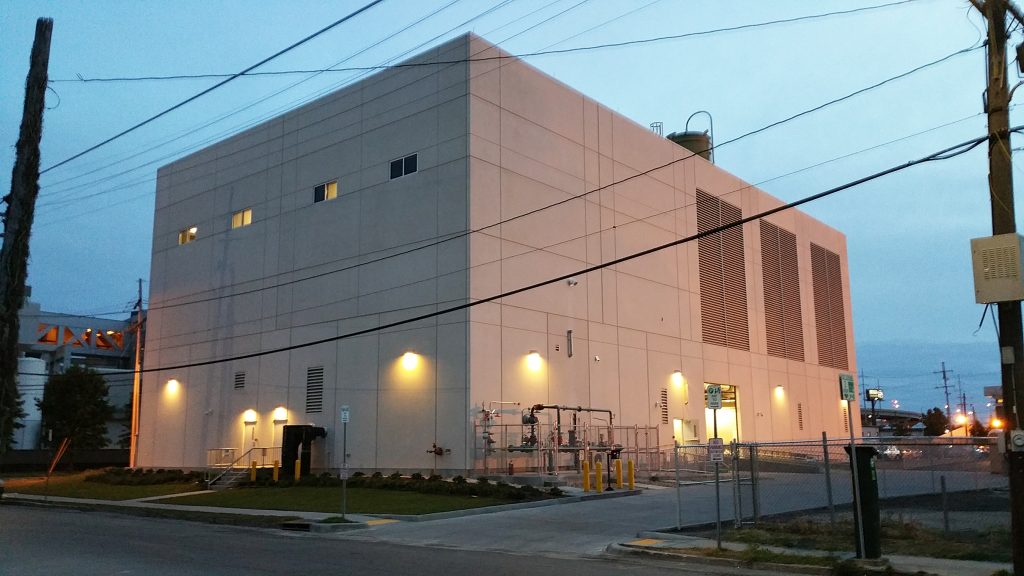
Location: New Orleans, Louisiana
Crisis Trigger: Post-Katrina resilience gap in healthcare infrastructure
Owner: EnwaveUSA / City of New Orleans Biomedical District
Team: Burns & McDonnell | Local consultants | City stakeholders
Awards: 2015 DBIA National Award of Merit – Industrial / Process / Research Facilities
State Road A1A Coastal Resilience Program
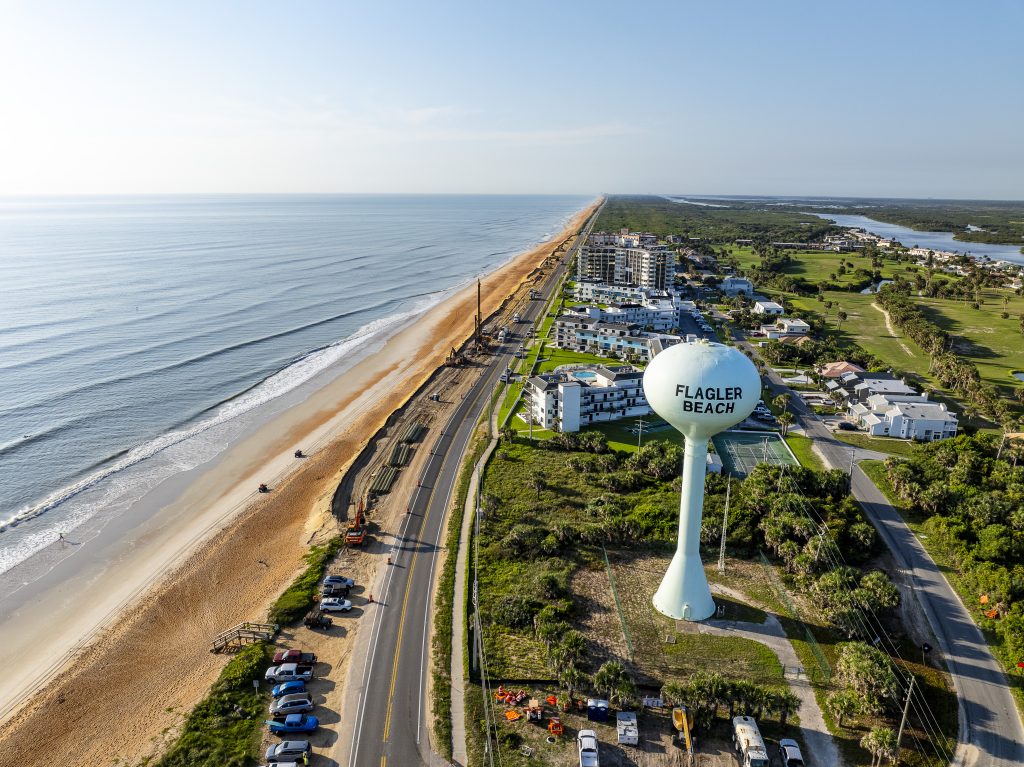
Location: Flagler County, Florida
Crisis Trigger: Repeated Atlantic hurricanes causing erosion and roadway failure
Owner: Florida Department of Transportation (FDOT)
Team: Superior Construction
Old Highway A1A Reconstruction – Summer Haven
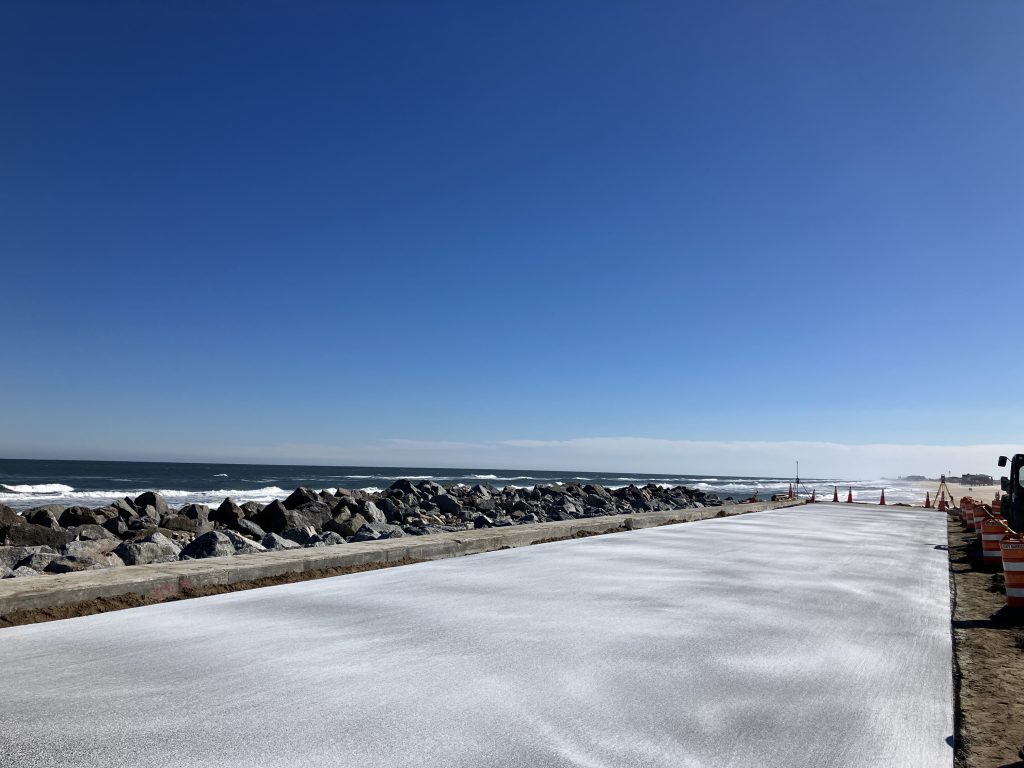
Location: St. Johns County, Florida
Crisis Trigger: Hurricane Matthew (2016) and subsequent coastal washouts
Owner: Florida Department of Transportation (FDOT)
Team: Superior Construction | DRMP Inc.
