Federal Owners interested in Progressive Design-Build (PDB) have more momentum, more authority and more attention than ever. What they’ve needed is a clear, practical path for applying qualifications-based selection (QBS) principles within the federal procurement environment.
DBIA’s newest Design-Build Done Right® Deeper Dive is designed to help close that gap.
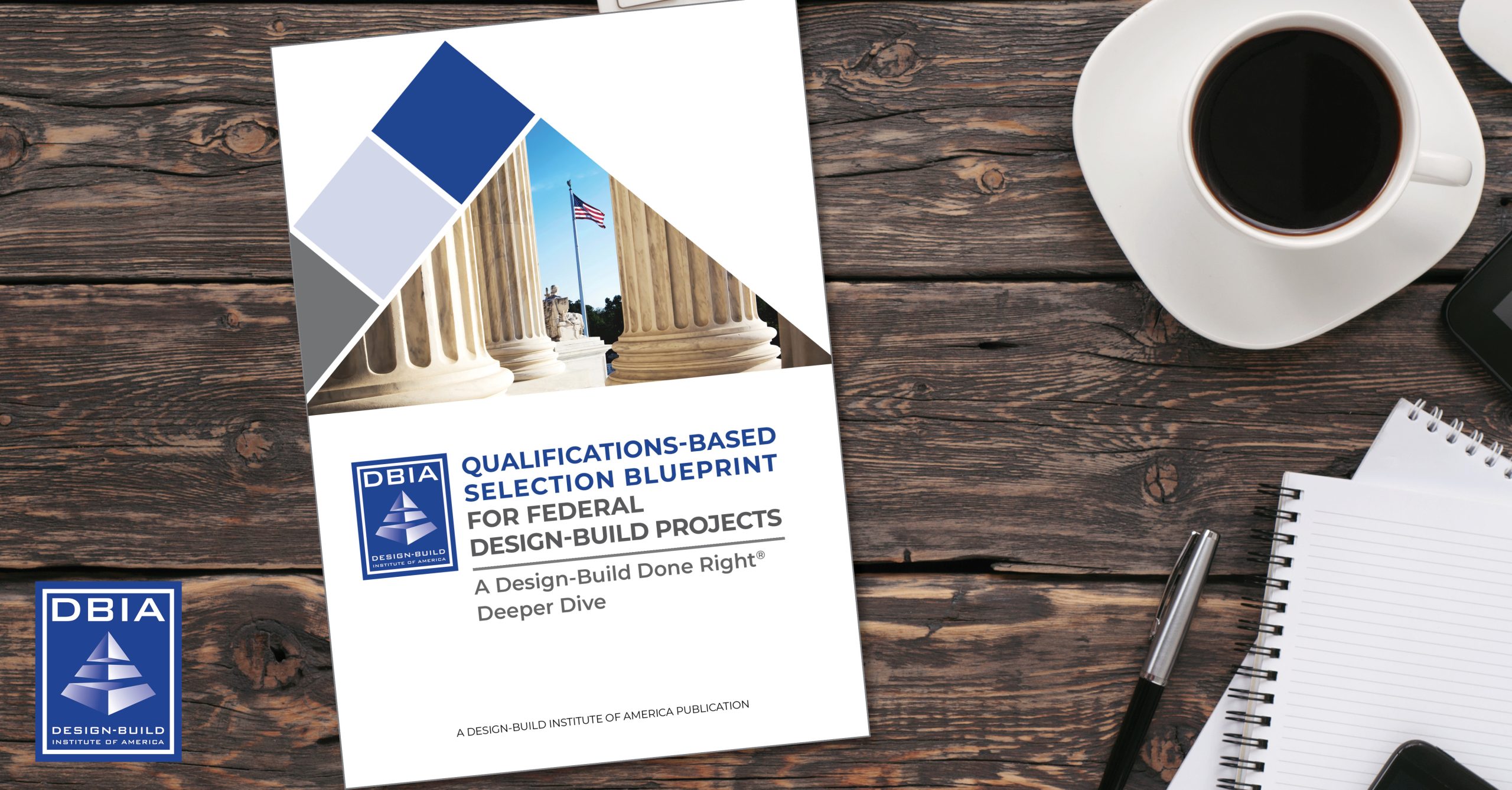
Qualifications-Based Selection Blueprint for Federal Design-Build Projects gives federal agencies practical guidance for using a QBS procurement process for federal design and construction projects. The resource is especially timely as more agencies explore PDB and other collaborative delivery approaches while navigating the Federal Acquisition Regulation (FAR), recent FAR reform efforts and expanded authority for PDB in military construction projects under the National Defense Authorization Act (NDAA).
The document gives federal Owners a practical framework for applying QBS principles within the existing regulatory structure. Current federal regulations limit the ability to implement a purely QBS process for construction contracts, even as PDB becomes more common in private sector and state/local markets. The Deeper Dive addresses that reality directly, outlining how federal agencies can use qualifications-based procurement techniques while maintaining compliance with federal requirements.
“The federal construction community has no shortage of policy documents, best practice guides and procurement frameworks,” said David Triplett, DBIA, Federal Markets Committee member and a lead author of the paper. “The challenge is turning that guidance into a procurement strategy that works for a specific project in a specific agency context. This Deeper Dive is designed to help federal Owners make that connection because the gap between policy and practice is often where procurement reform stalls.”
Why QBS Matters in Federal Design-Build
At its core, QBS prioritizes selecting the right team based on qualifications, demonstrated capability and alignment with project goals. In a PDB environment, that approach is especially important because the Owner and design-builder work together early to define the project, develop the design and arrive at an agreed-to price.
For federal procurement, the Deeper Dive explains that PDB best aligns with a QBS selection process. A qualifications-focused approach allows the Owner to select a capable team before the design and scope are fully developed, then work collaboratively toward cost and scope certainty.
This represents a significant departure from procurement models that place greater emphasis on early price competition.
The Deeper Dive outlines two primary FAR-based approaches federal Owners may use to apply QBS principles: Highest Technically Rated with a Fair and Reasonable Price (HTR-FRP) and Phased Acquisition. Both approaches support a central Design-Build Done Right® principle: select based on capability first, then develop the right solution with the right team.
It also gets into the mechanics of structuring QBS/PDB procurements, including how agencies address contract type, risk allocation, preconstruction services and pricing milestones.
Federal Momentum Around PDB
The new resource comes at an important moment for federal PDB. The NDAA authorized the Department of Defense to use accelerated design-build and PDB procedures for military construction projects. For MILCON projects, that authority provides clearer support for qualifications-based, collaborative procurement models.
Successful PDB also depends on the Owner’s readiness. In DBIA’s recent Design-Build Delivers Podcast conversation on federal PDB and the new QBS Deeper Dive, Triplett noted agencies need to understand what the delivery model requires as much as what the rules allow.
Owners that succeed in PDB, he explained, are often known in the market as fair and predictable partners. They understand their mission needs before procurement begins, maintain scope discipline and allocate risk to the party best positioned to manage it.
That Owner readiness directly affects market interest and project performance, while also influencing the quality of teams willing to pursue the work.
“No Lines on Paper”
One of the clearest distinctions in the paper is the difference between traditional best value procurement and QBS in design-build.
Under a QBS approach, the agency selects a design-builder to develop the design and provide preconstruction services through a defined milestone. The selected team then proposes a firm fixed price or guaranteed maximum price to complete the project.
The paper describes this as a “no lines on paper” approach. In other words, the entire design is a deliverable, not a prerequisite.
That gives the Owner and design-builder room to define the right solution together, rather than forcing teams to price or design around assumptions made too early. For complex federal facilities, that flexibility can be essential.
Training and Internal Alignment Still Matter
The Deeper Dive also makes clear that QBS within the FAR requires a collaborative mindset aligned with the integrated nature of design-build.
Before choosing design-build, federal Owners should understand project risk, assess internal capabilities and seek training. That applies whether the agency uses a technical/price tradeoff, HTR-FRP or Phased Acquisition approach.
This is especially important for agencies moving from traditional design-bid-build environments into more collaborative delivery models. PDB changes the Owner’s role, requiring earlier engagement and faster decision-making, along with a stronger commitment to collaboration.
In the podcast episode, Triplett said one of the most damaging misconceptions in the federal market is the idea that progressive design-build means agencies do not need to do their homework up front. In reality, PDB requires more Owner preparation before the solicitation, not less.
Preparation starts with clearly defining mission needs and understanding project constraints. It also requires stakeholder alignment, empowered decision-makers and a procurement structure that supports collaboration.
Coming Soon: A Companion AI Tutorial
DBIA is also developing a companion AI tutorial to help federal agencies better understand and apply the concepts in the QBS Deeper Dive.
The tutorial is intended to help practitioners connect the guidance to real project and agency contexts. Federal procurement includes layers of regulation, policy and guidance. Those pieces do not always speak to one another in plain language. The tutorial explains FAR nuances and connects related authorities. It also makes the guidance more accessible for contracting officers, program managers and other federal practitioners working through PDB implementation.
Be a Part of the Conversation
DBIA explores the new QBS Deeper Dive in a recent episode of the Design-Build Delivers Podcast, featuring a conversation with Triplett and Laura Stagner on federal PDB momentum, Owner readiness, procurement reform and how agencies can move from policy guidance to practical implementation.
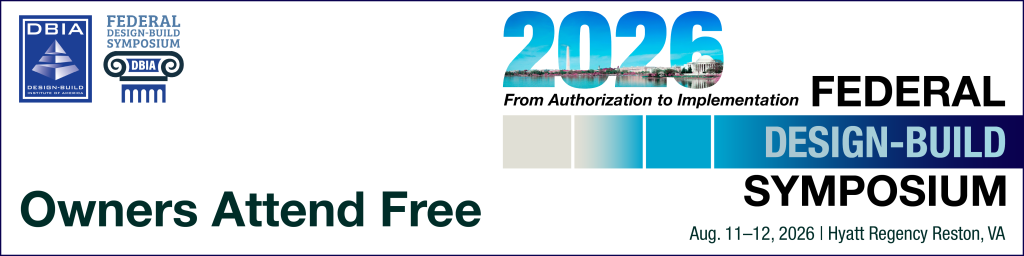
Be among the first to explore and discuss the practical application of this new QBS Deeper Dive with federal Owners, acquisition professionals and industry leaders at DBIA’s 2026 Federal Design-Build Symposium, August 11-12 in Reston, Virginia. The day-and-a-half event will focus on moving from authorization to implementation, examining both the successful deployment of PDB for military construction and how civilian agencies can leverage existing FAR authorities and QBS strategies to achieve similar collaborative outcomes. Owners attend for free. The Qualifications-Based Selection Blueprint for Federal Design-Build Projects is available now for free in the DBIA Bookstore.