As transportation Owners navigate aging infrastructure, complex corridors and growing mobility demands, design-build is helping teams deliver projects that improve access, support communities and keep people moving.
A doctor’s visit across town can hinge on a single connection. So can something as routine as choosing between the corner market and a full grocery store. Transportation shapes what’s reachable, how long it takes and how reliably people can get where they need to go.
“Transportation infrastructure is the lifeblood of society and a cornerstone of economic prosperity,” said Shailendra Patel, PE, FDBIA, Senior Vice President, Design-Build at AI Engineers and former Director of Alternative Delivery at a state DOT, where he led the delivery of more than 125 major infrastructure projects and advanced alternative delivery programs.
When access dictates daily life, how transportation projects are delivered is as important as the projects themselves. Owners are turning to design-build to align teams earlier, manage risk and deliver with greater coordination and speed.
That impact plays out across a community. Pedestrian access can support walkable neighborhoods, a new transit connection can shorten a commute and a reconstructed corridor can reconnect neighborhoods while improving freight movement and reducing congestion. It also shapes the less obvious parts of daily life, like whether a community can support youth sports, local theater or the kinds of shared experiences that make a place feel like home.
As Patel said, “transportation projects connect people, businesses and markets, creating the foundation for economic growth and community development.” He notes these investments support job growth and productivity, strengthen supply chains and improve regional competitiveness. In fast-growing regions and major employment centers, access determines how people move through daily demand, whether from tourism, commuting or regional growth.
Where Design-Build Delivers for Transportation
Transportation projects are complex and highly visible. They unfold on active corridors with tight right-of-way, dense utilities, environmental constraints and multiple agencies involved from the start. When teams stay siloed, critical information surfaces late, leading to detours, safety issues, redesign and disruption for the communities depending on the work.
Transportation is one of the largest and fastest-growing areas for design-build. Highway and street projects account for roughly 16% of design-build spending, with the broader transportation sector bringing that share to nearly a quarter of the market. At the same time, transportation design-build is growing at more than twice the rate of the overall market. States are responding to that growth. Today, 41 state DOTs have full design-build authority, with most others using it in some capacity and only a few states maintaining significant limits.
In practice, Design-Build Done Right® in transportation projects brings designers and builders together early to resolve utility conflicts, traffic control and staging before they reach construction. It requires coordinated right‑of‑way and stakeholder engagement so projects can move through parcels and community concerns without stalling. Work advances through overlapping design and construction phases, keeping projects moving and shortening lane closures and detours.
Design-build also allows teams to optimize design during delivery, reducing cost and long-term impacts while adapting to real conditions in the field. When projects face pressure, integrated teams can respond quickly to restore critical access. And across all of it, multimodal coordination keeps different users — from pedestrians and cyclists to transit riders and drivers — in the same conversation rather than treating them as afterthoughts.
For DOTs managing aging infrastructure and constrained corridors, design-build offers a practical way to manage complexity and keep projects moving while still meeting the expectations of the communities that depend on them.
DBIA Project/Team Award winners from 2024 and 2025 show how these outcomes take shape in practice and how Design-Build Done Right® helps bring them to life.
Reconnecting Communities
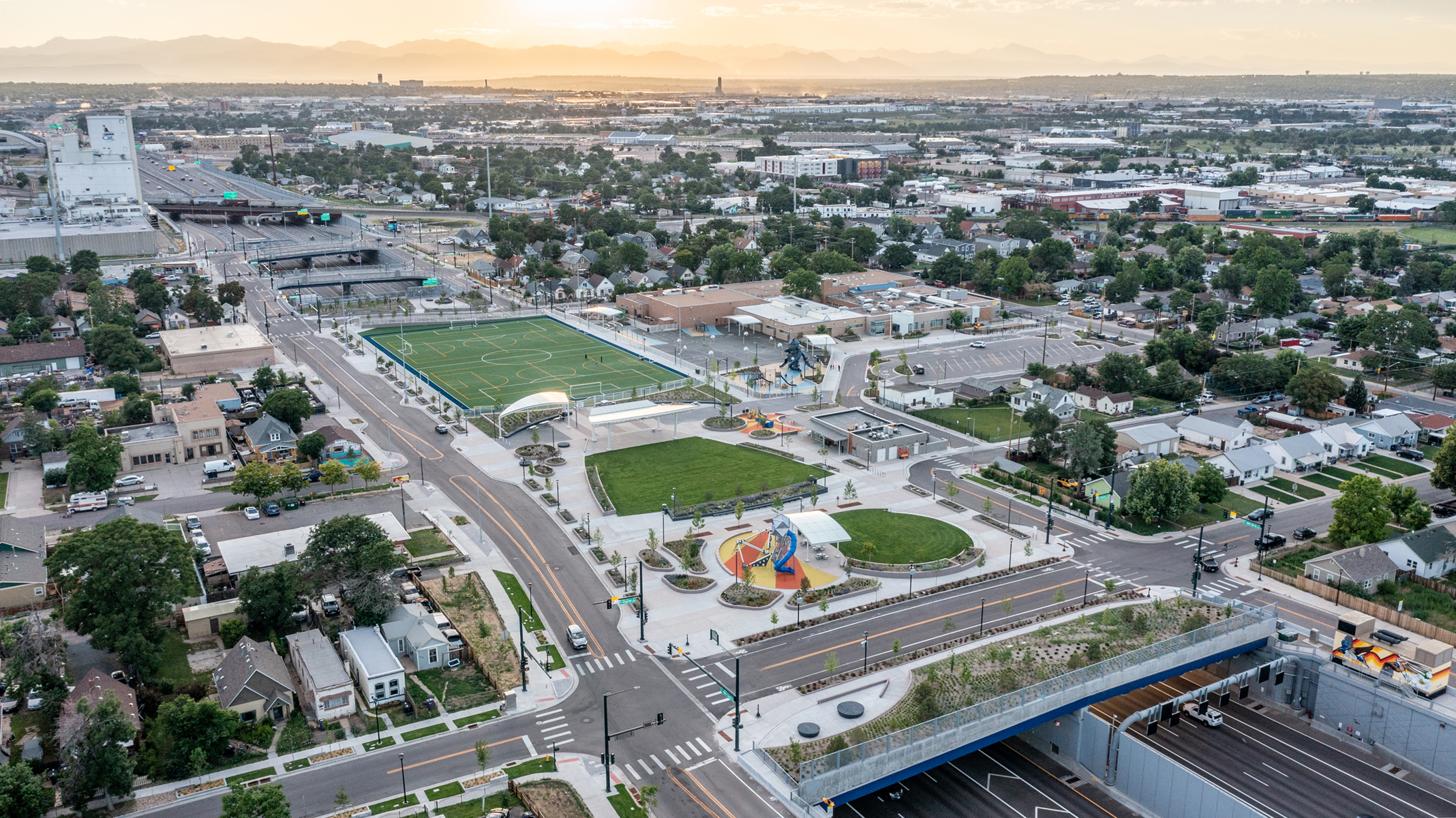
Denver’s Central 70 Design-Build-Finance-Operate-Maintain project replaced an aging viaduct that had divided the Globeville and Elyria-Swansea neighborhoods with a below-grade highway capped by a 4-acre park. The project restored neighborhood connections while maintaining mobility along a corridor carrying roughly 200,000 vehicles per day.
“Central 70 is a flagship for transportation projects impacting communities beyond just infrastructure construction. By providing greenway and sports facilities that now connect a once-bifurcated community, Central 70 brings the possibility for enhanced community pride as well as ease of connectivity,” said John Bale, MBA, PE, FDBIA, a Program and Project Manager at Horrocks who has worked on more than 50 design-build projects and served on both DBIA’s Transportation Markets Committee and National Board of Directors.
Design-build allowed the team to incorporate community priorities early, coordinating closely with residents, schools and businesses while adding safer crossings, sidewalks and public space. That collaboration extended to Union Pacific, where revised track phasing shaved months from the schedule. The result is not only a rebuilt highway but infrastructure that reconnects the community around it.
Making Complex Corridors Work
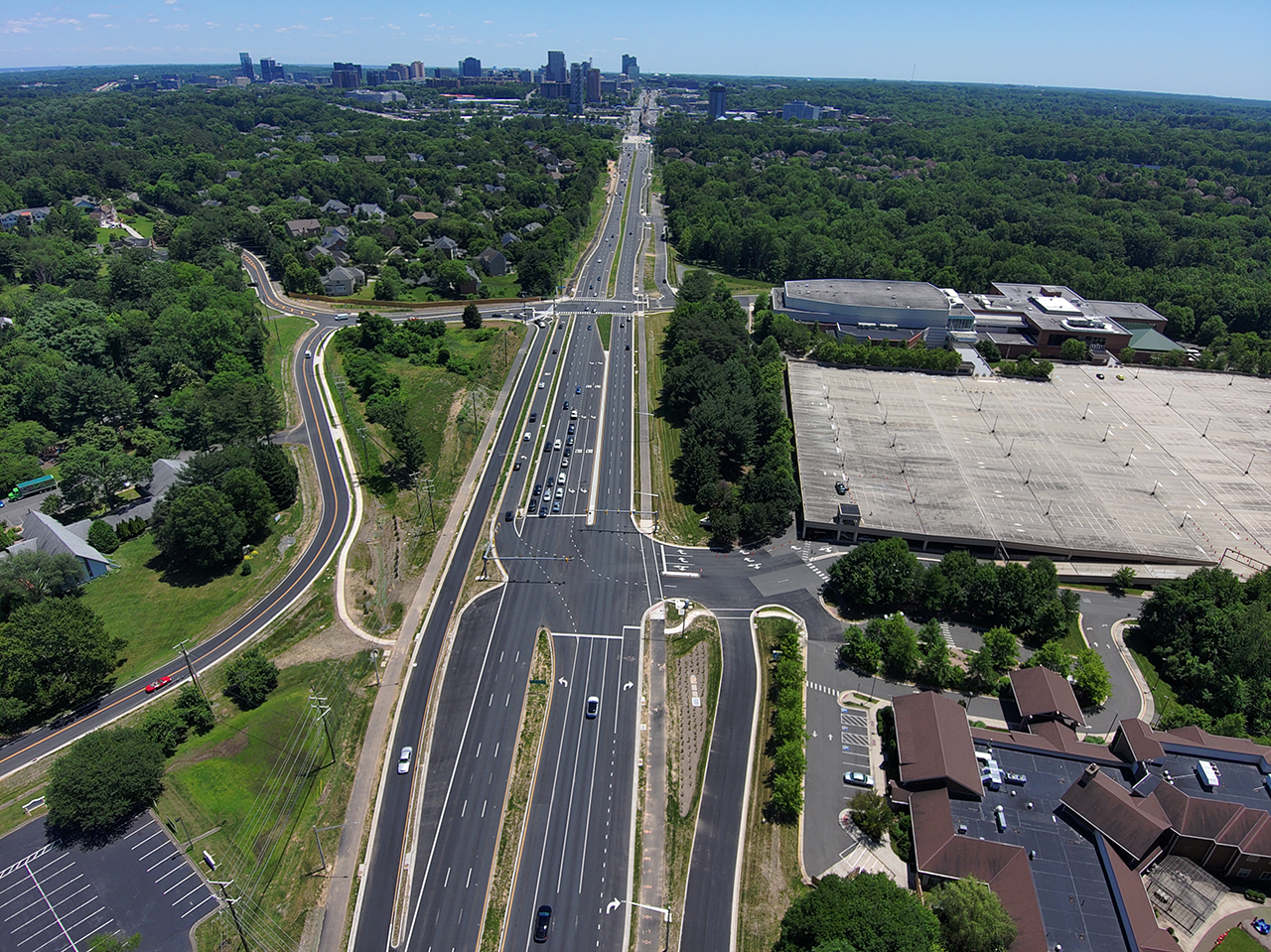
In Northern Virginia, the Route 7 Corridor Improvements Project addressed one of the last major bottlenecks on a key east-west commuter route. The project expanded a four-lane segment within a fully developed corridor, requiring coordination with more than 50 homeowners’ associations, right-of-way acquisition from hundreds of parcels and extensive utility relocation.
Through sustained outreach and design adjustments, the team reduced community impacts while keeping work moving. The project also introduced the region’s first displaced left-turn intersection, improving traffic flow and safety along the corridor.
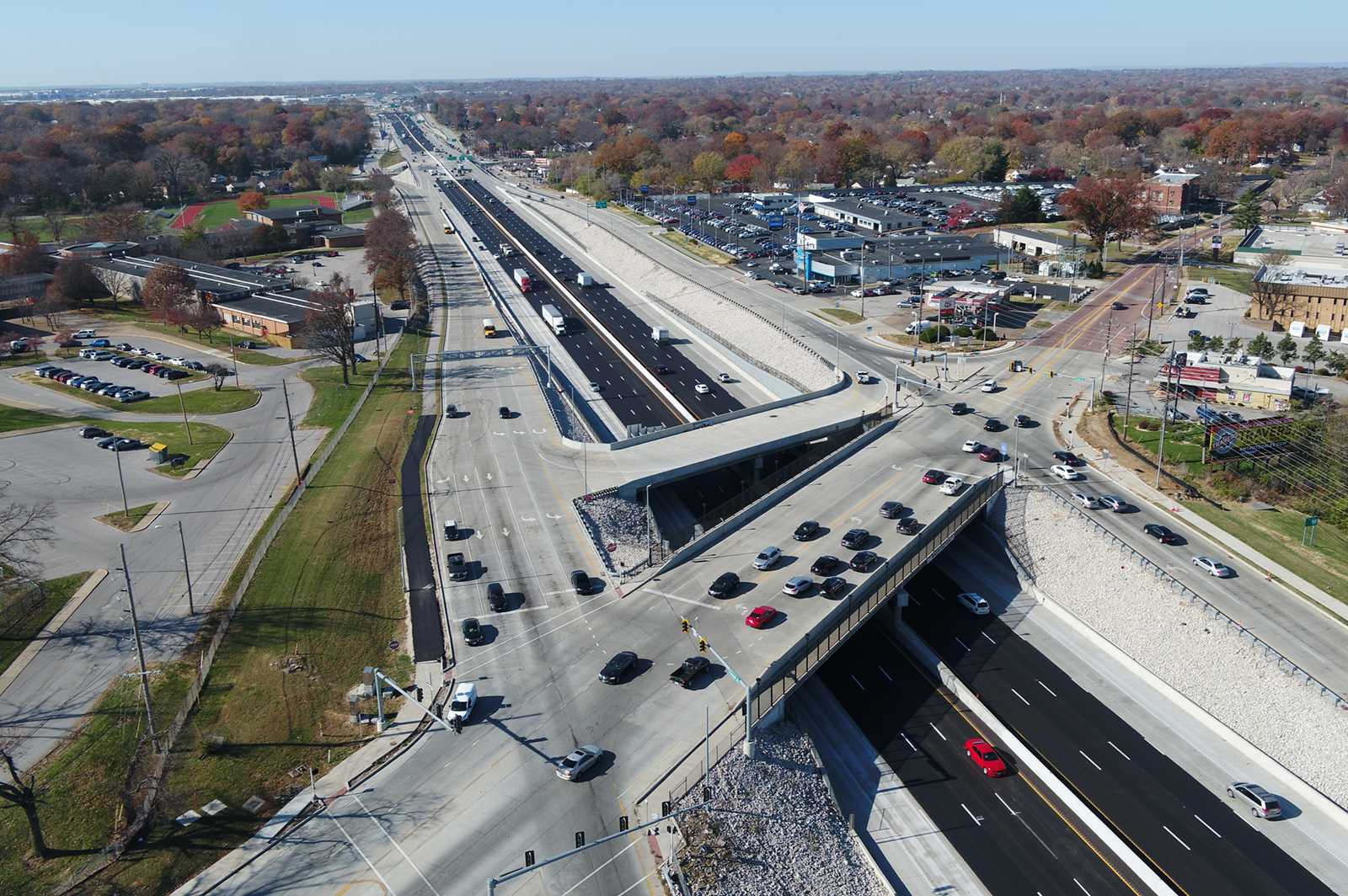
The I-270 North Design-Build Project in St. Louis improved a major freight and commuter route carrying more than 140,000 vehicles per day. Along with replacing deteriorated pavement and aging bridges, the project addressed long-standing gaps in pedestrian, bicycle and transit access.
Design-build gave the team flexibility to rethink how the corridor served different users, including adding a MetroBus-only lane and improving connections across the highway. The result is a more reliable route that supports regional movement while expanding access for the communities alongside it.
Planning for What’s Next
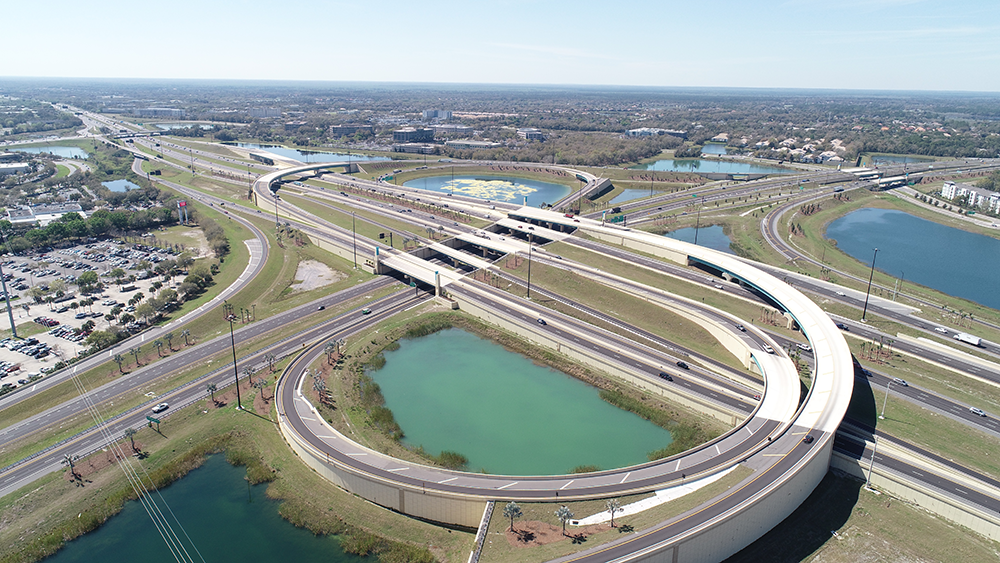
The Wekiva Parkway Section 8 Interchange completed a long-planned Central Florida connection while preparing the network for continued population growth, tourism and future expansion.
Working collaboratively from the outset, the design-build team reduced bridge deck area, preserved existing structures and lowered costs while accommodating future I-4 Beyond the Ultimate express lanes. An early alignment shift also allowed significant portions of the work to be constructed offline, limiting disruption and positioning the interchange to serve both current and future transportation needs.
Serving Different Contexts
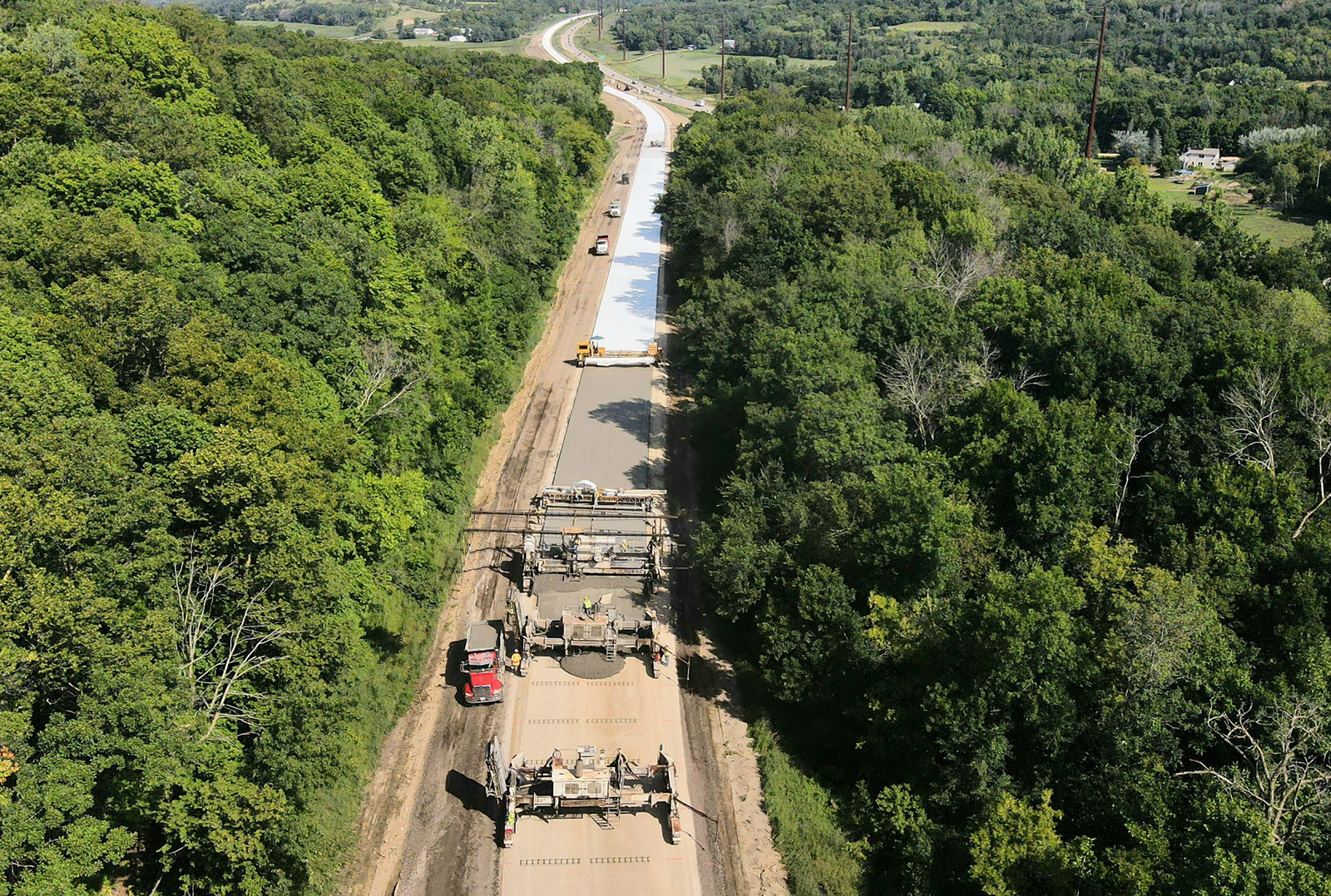
Minnesota’s Hwy 52 Zumbrota to Cannon Falls project improved a critical regional route while preserving access for farmers, residents and businesses along the corridor.
“The Hwy 52 project shows how design-build can improve both regional mobility and local access,” said Benjamin Dzioba, PE, PMP, FDBIA, the project’s Project Executive and now Senior Vice President at KLJ. “By aligning the Owner, designer and contractor early, the team was able to implement an alternative interchange design to reduce impacts, improve constructability and deliver a safer, more reliable corridor.”
That alternative design was proposed during procurement, reducing right-of-way impacts, improving staging and allowing multiple phases of work to proceed simultaneously. Digital modeling and machine-controlled grading further helped the team identify challenges early and maintain quality during construction.
Expanding How People Move
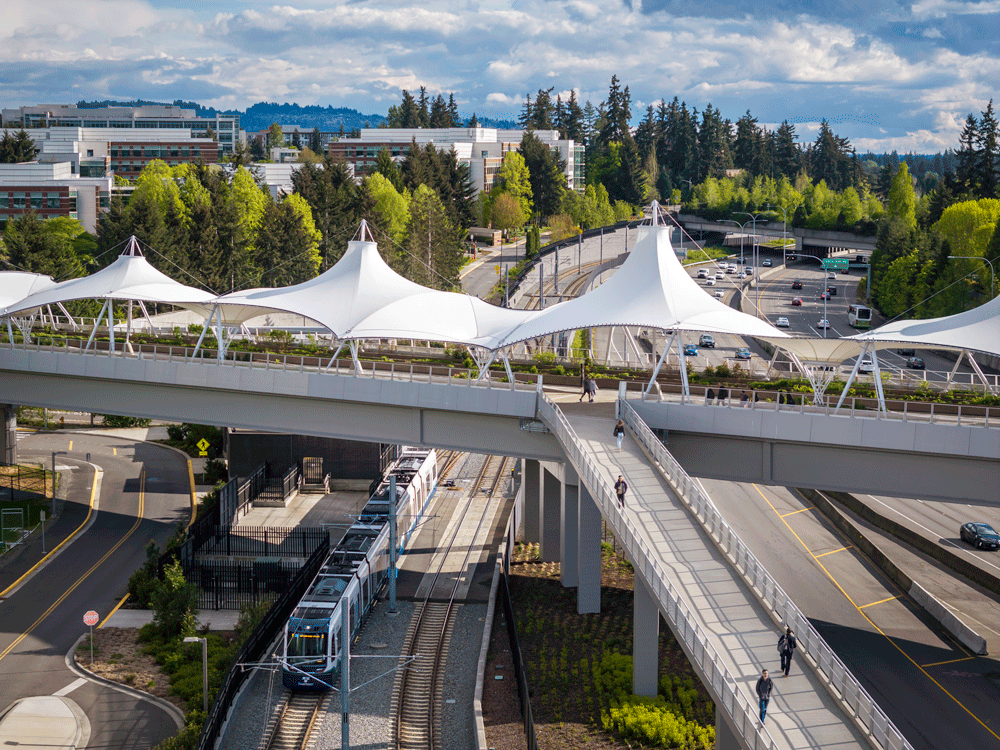
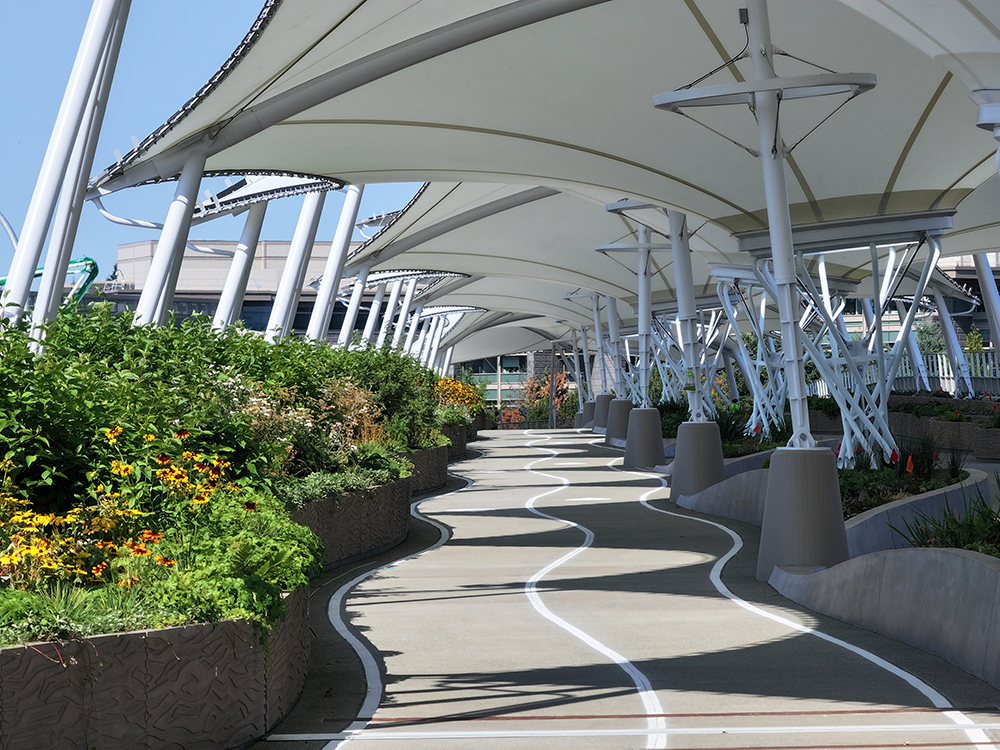
The Redmond Technology Station Pedestrian Bridge in Washington connects Microsoft’s east and west campuses with Sound Transit light rail, regional bike trails, bus service, restaurants and retail. By linking destinations separated by SR 520, the project makes walking, cycling and transit more practical for everyday travel.
The bridge spans 20 roadway lanes and two active light rail tracks, with direct connections to the station and the SR 520 Bus Flyer Stop. Design-build helped the team coordinate multiple agencies, stage construction and prefabricate major elements while the transportation systems below remained operational.
Weather protection, landscaping, separate pedestrian and bicycle paths and public gathering spaces make the bridge more than a crossing. It functions as part of the surrounding community and transportation network.
Bale said, “The Redmond Station bridge demonstrates that a project doesn’t need to be a large, highway capacity improvement project to impact communities and businesses. This connection took a once-segregated campus to a new level of seamless connectivity, advancing the Owner’s goals and community’s needs.”
When It Really Matters
Design-build’s value becomes especially visible when critical access is suddenly lost. After Pittsburgh’s Fern Hollow Bridge collapsed and Hurricane Ian severed Sanibel Island’s only mainland connection, integrated teams mobilized quickly, advanced design and construction concurrently and restored essential routes under extreme conditions. When transportation connections fail, communities feel the consequences immediately. Early alignment gives teams a better chance to respond with speed, coordination and resilience.
Learn more about Fern Hollow and Sanibel Island in DBIA’s series on crisis and emergency response.
What These Projects Point To
These projects show that transportation design-build is not only about delivering roads, bridges, stations or interchanges. It is about delivering connections.
Patel said, “Beyond mobility, transportation infrastructure expands access to opportunity and helps build stronger, more resilient communities over time.”
For transportation Owners, that distinction is practical and public. Projects unfold on active corridors, with complex stakeholders, funding constraints and communities that experience the impact in real time. Collaborative delivery gives teams a way to align early, manage risk and keep decisions focused on both project performance and public value.
As mobility needs grow more complex, Owners who bring teams together early are better positioned to deliver transportation projects that improve access, strengthen connections and support the people who rely on them every day.
Denver’s Central 70 Design-Build-Finance-Operate-Maintain
Route 7 Corridor Improvements Project
I-270 North Design-Build Project
Wekiva Parkway Section 8 Interchange
Hwy 52 Zumbrota to Cannon Falls
Redmond Technology Station Pedestrian Bridge